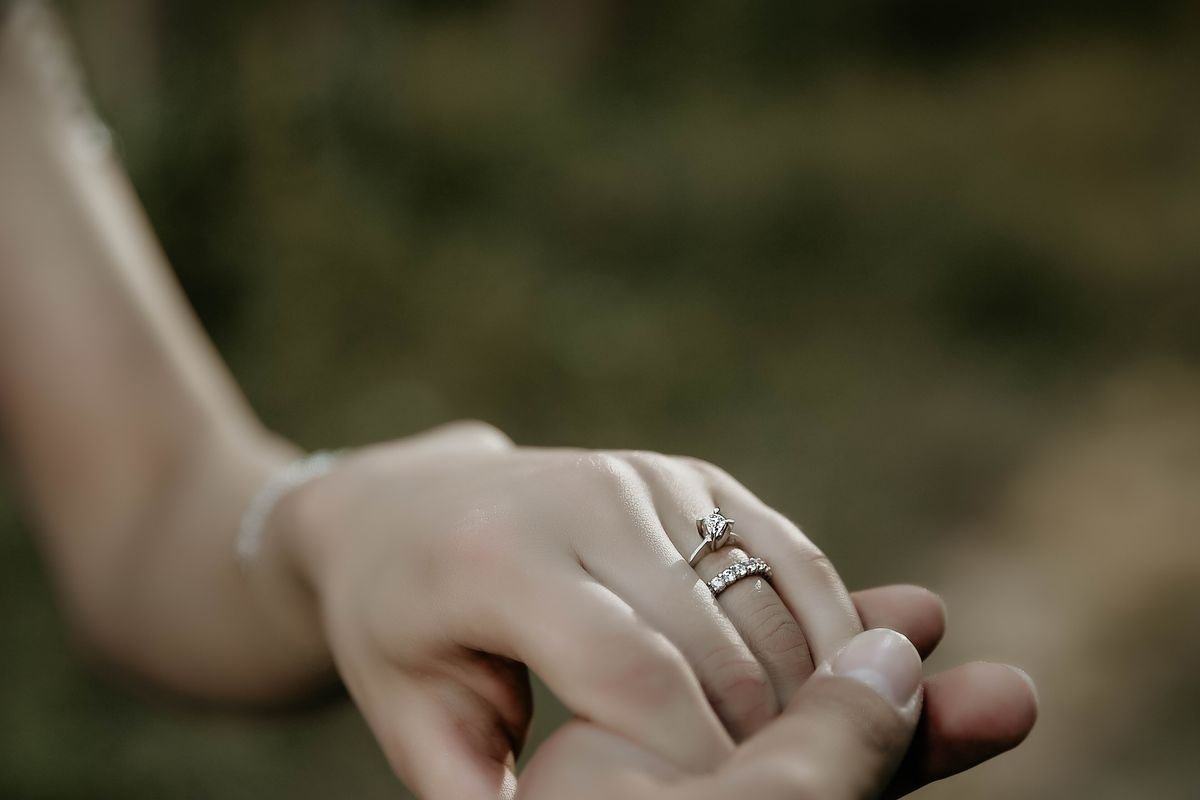
Round and oval are two of the most popular diamond shapes for engagement rings, and at first glance they seem similar: both are soft, curved and full of sparkle. Look closer, though, and they wear quite differently. One is the timeless classic; the other looks larger for its weight and lengthens the finger. This guide to oval vs round engagement ring choices walks through six differences, from sparkle and apparent size to settings and everyday wear, so you can decide which one suits your hand and style.
The short answer: choose a round diamond for maximum sparkle and a timeless, symmetrical look. Choose an oval for a stone that looks larger than a round of the same carat weight, an elongating effect on the finger and a slightly more distinctive look. Ovals can show a “bow-tie” shadow across the middle, so view them in person or on video before you buy.
1. The look on the hand
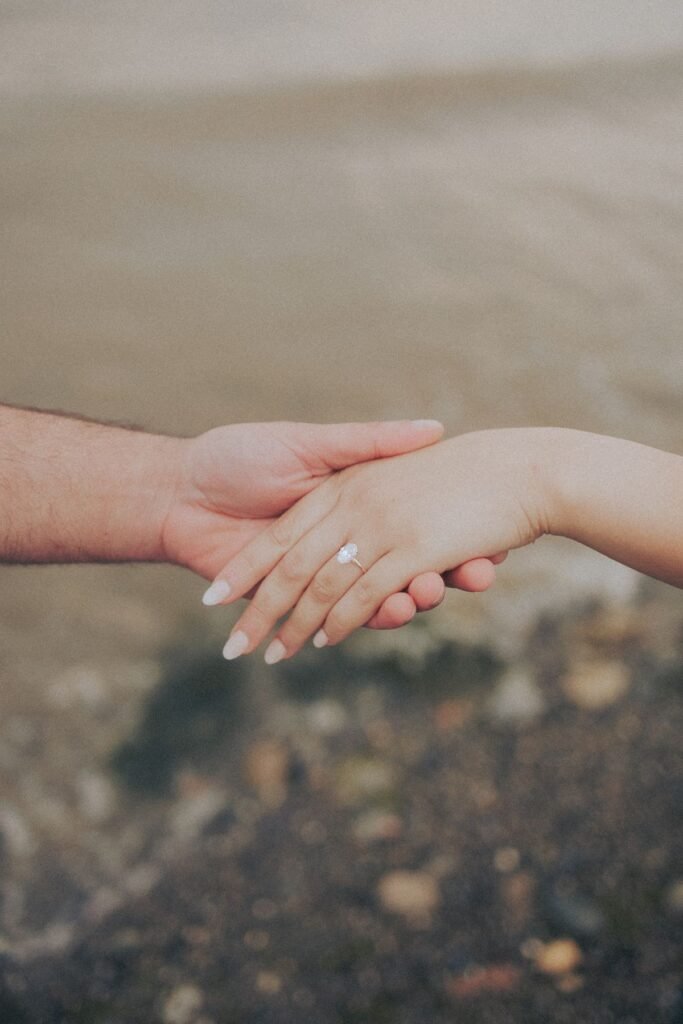
This photo shows two hands side by side on a soft cream background: one wearing a round solitaire on a thin gold band, the other an oval solitaire on a similar band. The round looks crisp and symmetrical; the oval looks longer and stretches along the finger.
Round: perfectly symmetrical from every angle, classic and understated.
Oval: elongated, softly romantic, and it makes fingers look longer and slimmer.
Tip: try both shapes on in person. Many people are surprised by which one suits their hand once it’s on.
2. Sparkle
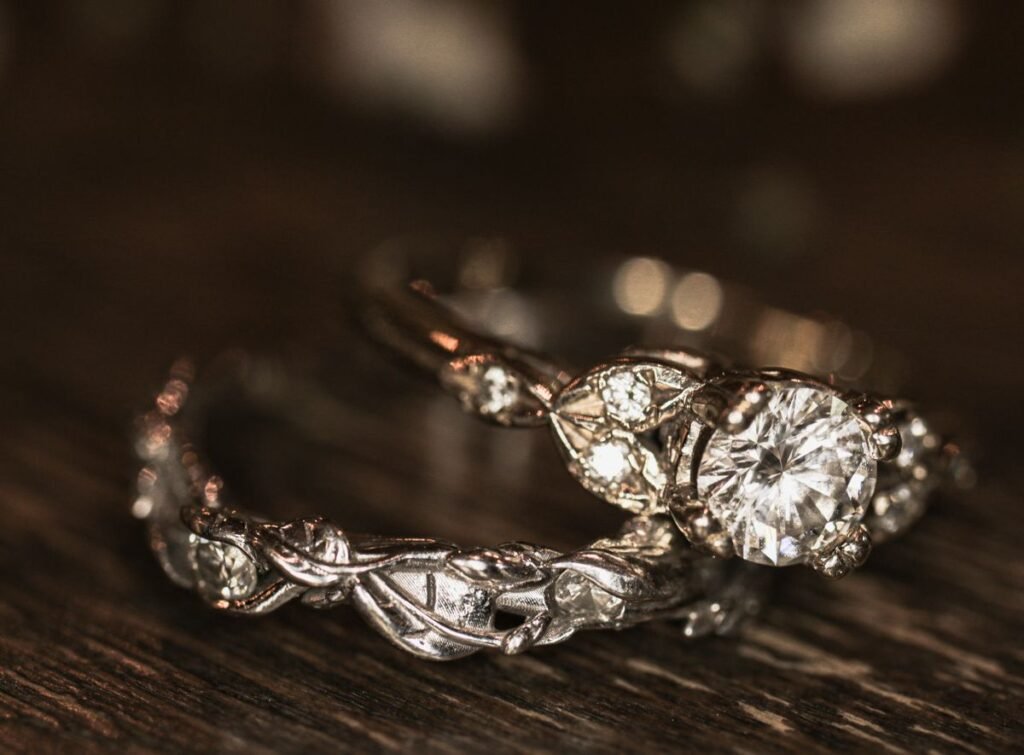
Here a close-up of a round brilliant diamond catches the light with bright flashes across its surface, set in a simple four-prong mount on a white background. If sparkle is your top priority, the round brilliant cut is designed specifically to return as much light as possible.
Round: the round brilliant cut is famous for its brightness and fire, and it’s the shape most diamond cutting traditions have refined the longest.
Oval: ovals use a similar brilliant faceting style, so they sparkle beautifully too, but the elongated shape can create a darker “bow-tie” area across the center in some stones.
Tip: when buying an oval, look at it in different lighting and on video. A well-cut oval has a minimal bow-tie.
3. Apparent size
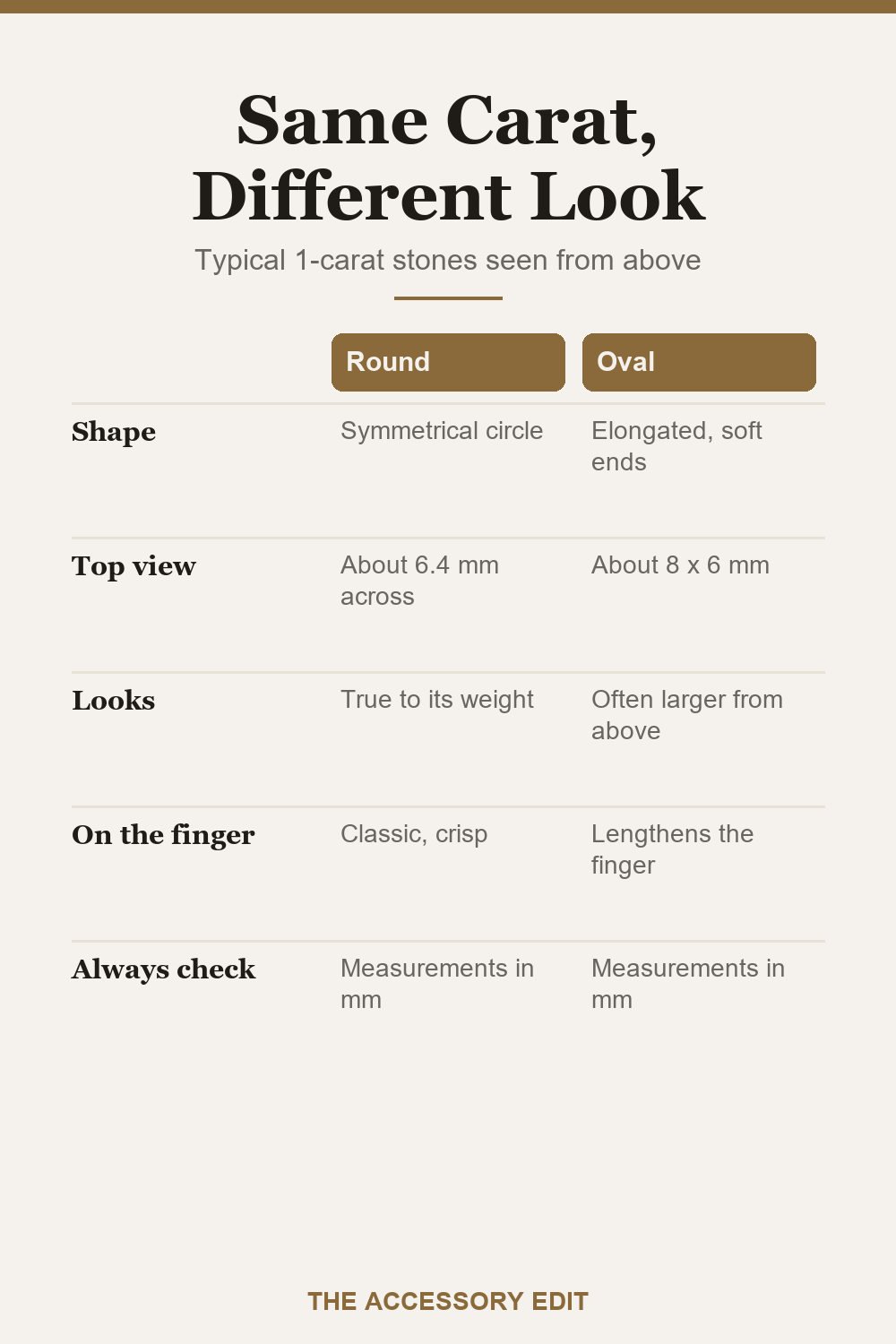
The comparison card above puts a typical 1-carat round next to a typical 1-carat oval. Because ovals spread their weight over a longer surface, they often look larger from above than a round of the same carat weight.
What it means for you: if you’d like a ring that looks bigger for your budget, an oval is a smart choice.
Tip: ask for the stone’s measurements in millimeters, not just its carat weight. Two stones of the same weight can look quite different in size depending on how they’re cut.
4. Settings that suit each shape
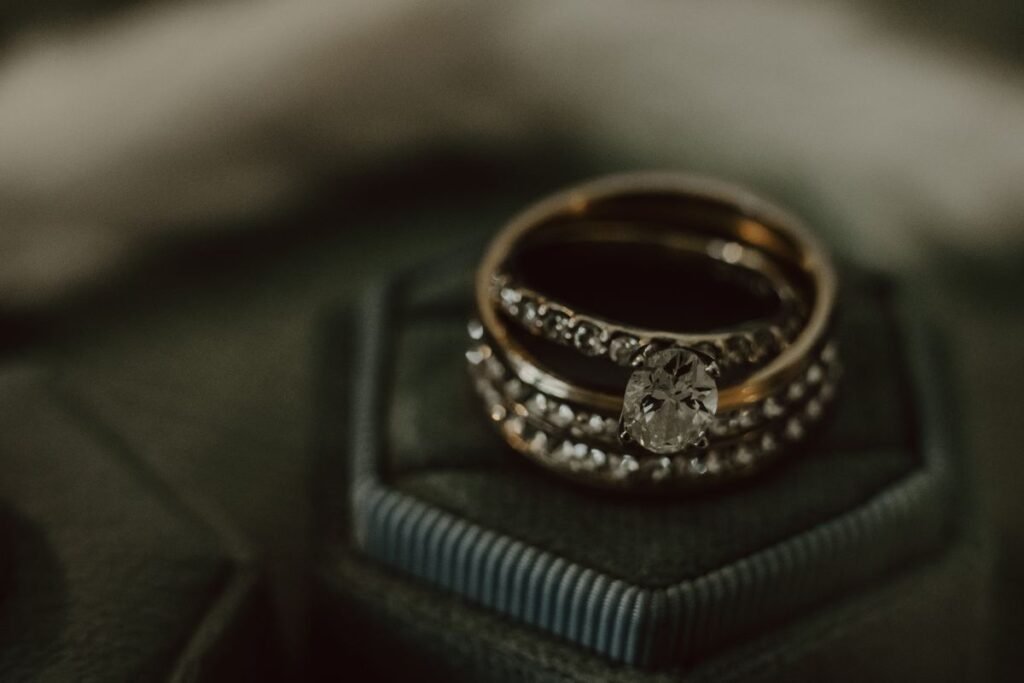
In this photo three ring settings are lined up on a velvet tray: a round solitaire on a thin band, an oval with a halo of small diamonds, and an oval set east-west (sideways) on a plain band. Both shapes work in most settings, but some styles show each one off best.
Round: classic four- or six-prong solitaires, halos, three-stone rings and pavé bands all suit it.
Oval: solitaires, halos that make it look even larger, hidden halos, and east-west settings for a modern twist.
Tip: an oval’s narrow ends are its most delicate points. Prongs at each end, or a bezel, help protect them.
5. Wedding band pairing
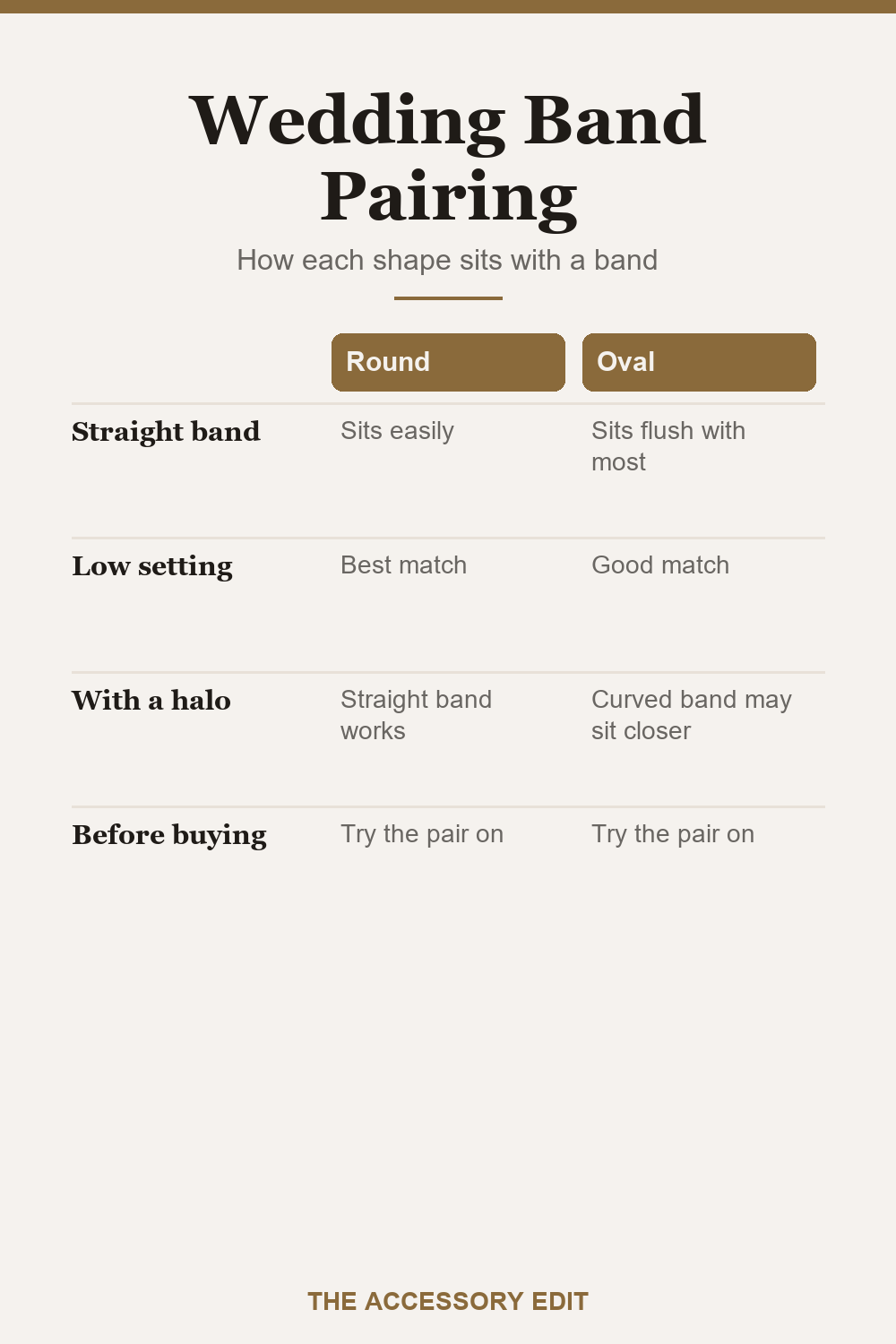
The card above sums up how each shape sits with a wedding band. Think about how your engagement ring will sit with a wedding band from day one.
Round: sits easily next to straight bands, especially in low-profile settings.
Oval: sits flush with most straight bands; for a larger oval or a halo, a slightly curved or notched band may sit closer.
Tip: bring your engagement ring when shopping for wedding bands, or ask the jeweler to try the pairing before you buy.
6. Everyday wear
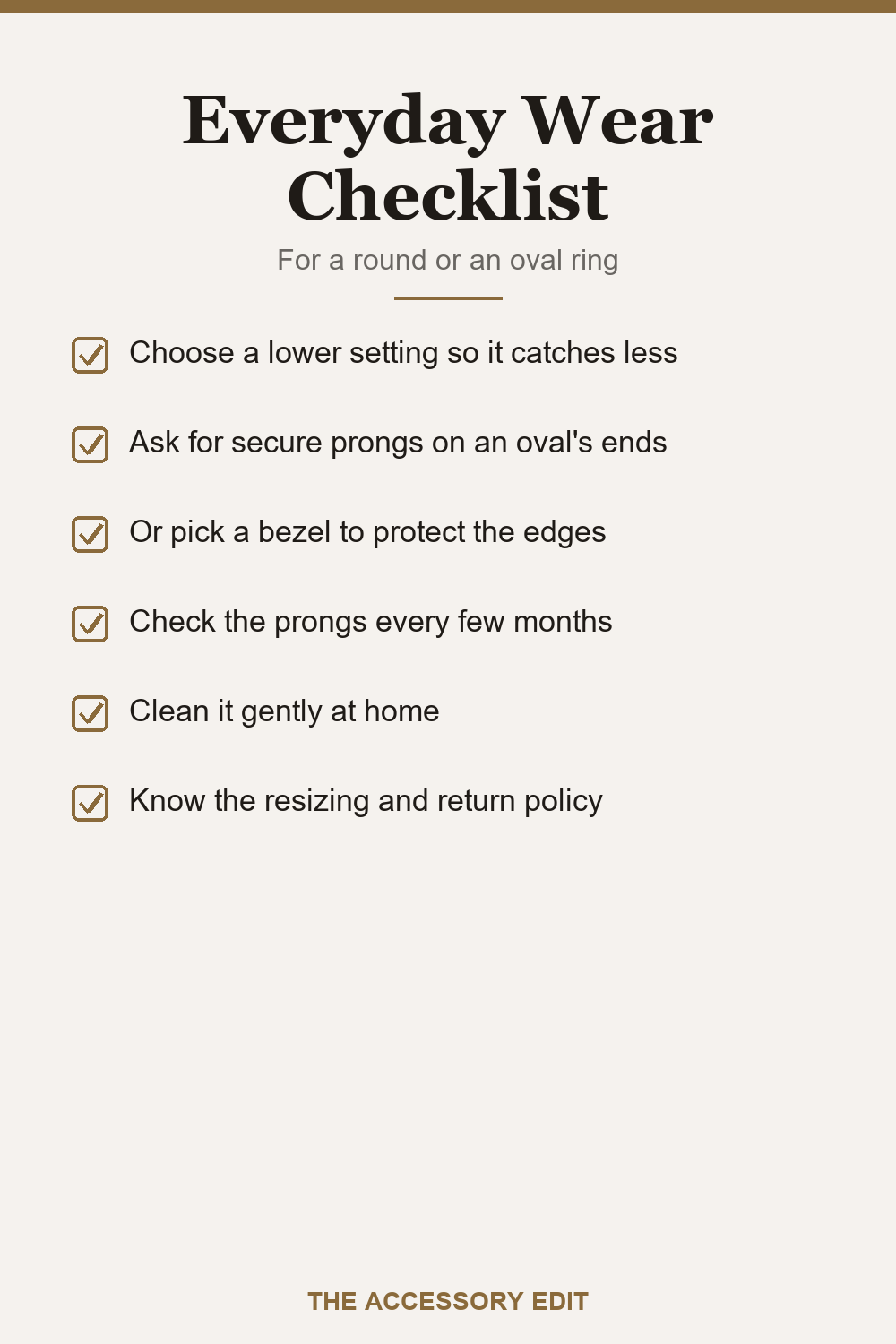
The checklist above covers the small choices that make a ring easy to live with, whichever shape you pick. Practical wear matters as much as looks.
Round: symmetrical with no points, so it’s less likely to catch.
Oval: also has no sharp corners, so it’s practical too, though the ends benefit from secure prongs.
Tip: lower settings catch less on sweaters and gloves than tall ones, for either shape. For cleaning tips, see how to clean an engagement ring at home.
What to check when buying either shape
Once you’ve chosen a shape, a few checks help you get the best stone for your budget.
For a round diamond: the cut grade matters most, because it controls how much the stone sparkles. Many grading reports include a cut grade for round brilliants; a higher grade usually means more brightness.
For an oval diamond: look at the length-to-width ratio (the length divided by the width). Lower ratios look wider and more rounded; higher ratios look longer and slimmer. Many people find ratios somewhere around 1.3 to 1.5 look classic, but it’s a matter of taste, so compare a few. Also check the bow-tie in person or on video.
For both shapes:
- Ask for an independent grading report that lists the 4Cs (cut, color, clarity, carat) and the measurements.
- Compare stones by their measurements in millimeters, not only carat weight.
- View the stone in several kinds of light: daylight, warm indoor light and a spotlight.
- Check the return and resizing policy before you buy.
For example: two 1-carat stones can look different on the hand. An oval might measure about 8 x 6 mm, while a round of the same weight is often around 6.4 mm across, which is why ovals can look bigger from above. Exact numbers vary from stone to stone, so always check the report.
Oval vs round engagement ring: quick comparison
- Look: round is classic and symmetrical; oval is elongated and romantic.
- Sparkle: round is the brightest; ovals sparkle well but can show a bow-tie.
- Size: ovals often look larger for the same carat weight.
- Finger: ovals lengthen the finger.
- Settings: both suit solitaires and halos; ovals also suit east-west settings.
You might also like
- 6 Emerald Cut Engagement Ring Styles
- How to Find Your Ring Size at Home
- How to Clean an Engagement Ring at Home
FAQ
Does an oval diamond look bigger than a round one?
Often yes. Ovals spread their weight over a longer surface, so they can look larger from above than a round of the same carat weight.
What is the bow-tie effect?
A darker area across the center of some oval diamonds, caused by how light passes through the stone. Well-cut ovals keep it minimal.
Which shape is more timeless?
The round brilliant is the classic, most traditional choice, but ovals have been popular for many years too.
Try both shapes on, look at real stones in different light, and pick the one that makes you smile when you look down at your hand.

Leave a Reply