
Few things are more disappointing than opening a jewelry box to find your favorite silver necklace has turned dull and dark. Tarnish happens when certain metals, especially sterling silver, react with sulfur compounds and moisture in the air. You can’t stop chemistry, but you can slow it down a lot with the way you store your pieces. This guide on how to store jewelry to prevent tarnish covers six simple storage habits, from airtight bags to anti-tarnish strips, with what each one does and how to set it up.
The short answer: keep jewelry clean, dry and away from air and humidity. Store each piece separately in an airtight bag or a lined box, add an anti-tarnish strip or a silica gel packet, keep it out of the bathroom, and wear your silver often, since regular wear and gentle wiping help keep tarnish from building up.
1. Clean and dry before storing
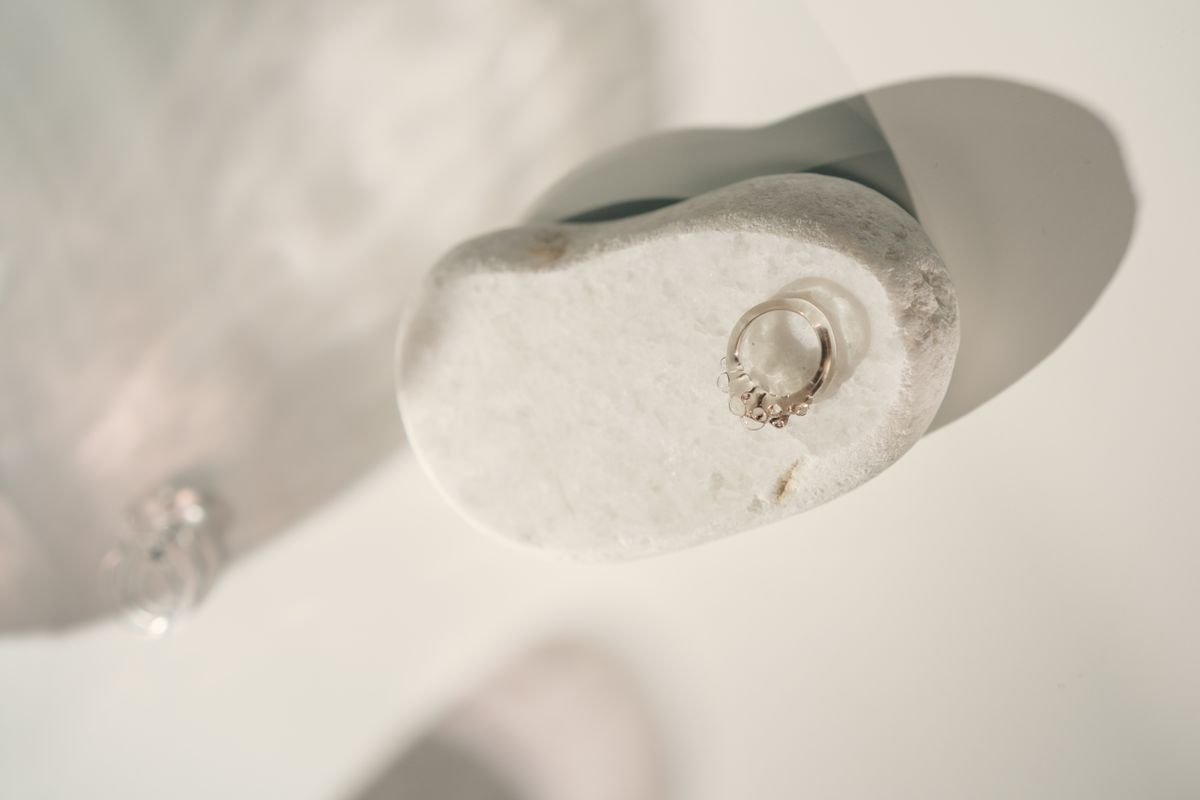
This photo shows a silver ring resting on a pale stone, clean and bright. Keep it that way by wiping each silver piece with a soft polishing cloth before you put it away. Lotion, sweat and skin oils left on jewelry can speed up tarnish, so a quick wipe before storing makes a difference.
How to do it: after wearing, wipe each piece gently with a soft, dry cloth. If it’s wet from washing or rain, let it air-dry completely before putting it away.
Tip: keep a polishing cloth next to your jewelry box so wiping becomes a habit.
2. Use small airtight bags
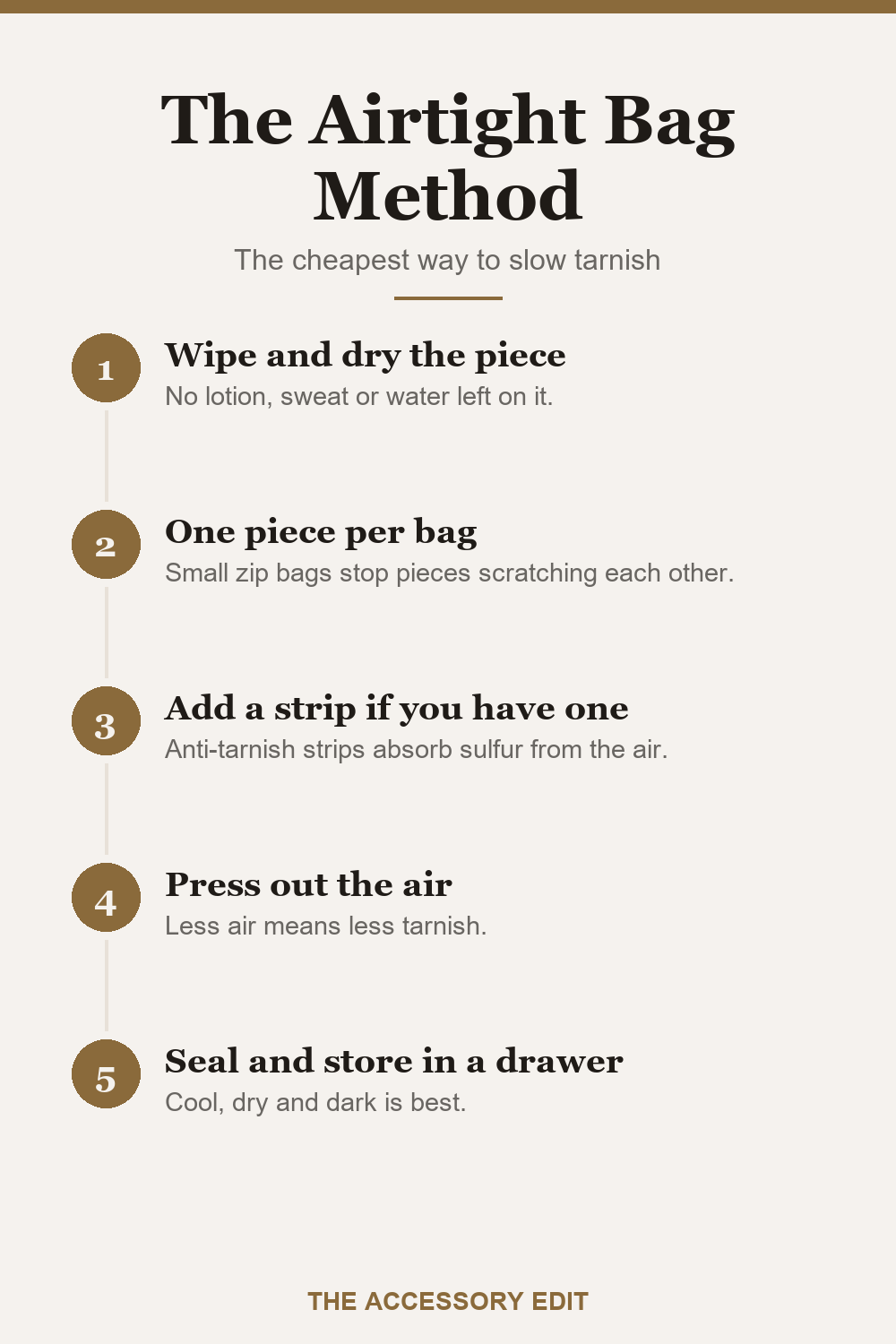
The five steps above are the whole method. Less air means less tarnish, and small bags are the cheapest way to cut off air.
How to do it: place each piece in its own small zip bag, press out as much air as you can, and seal it.
Tip: one piece per bag also prevents scratches and tangled chains.
3. Add anti-tarnish strips or silica gel
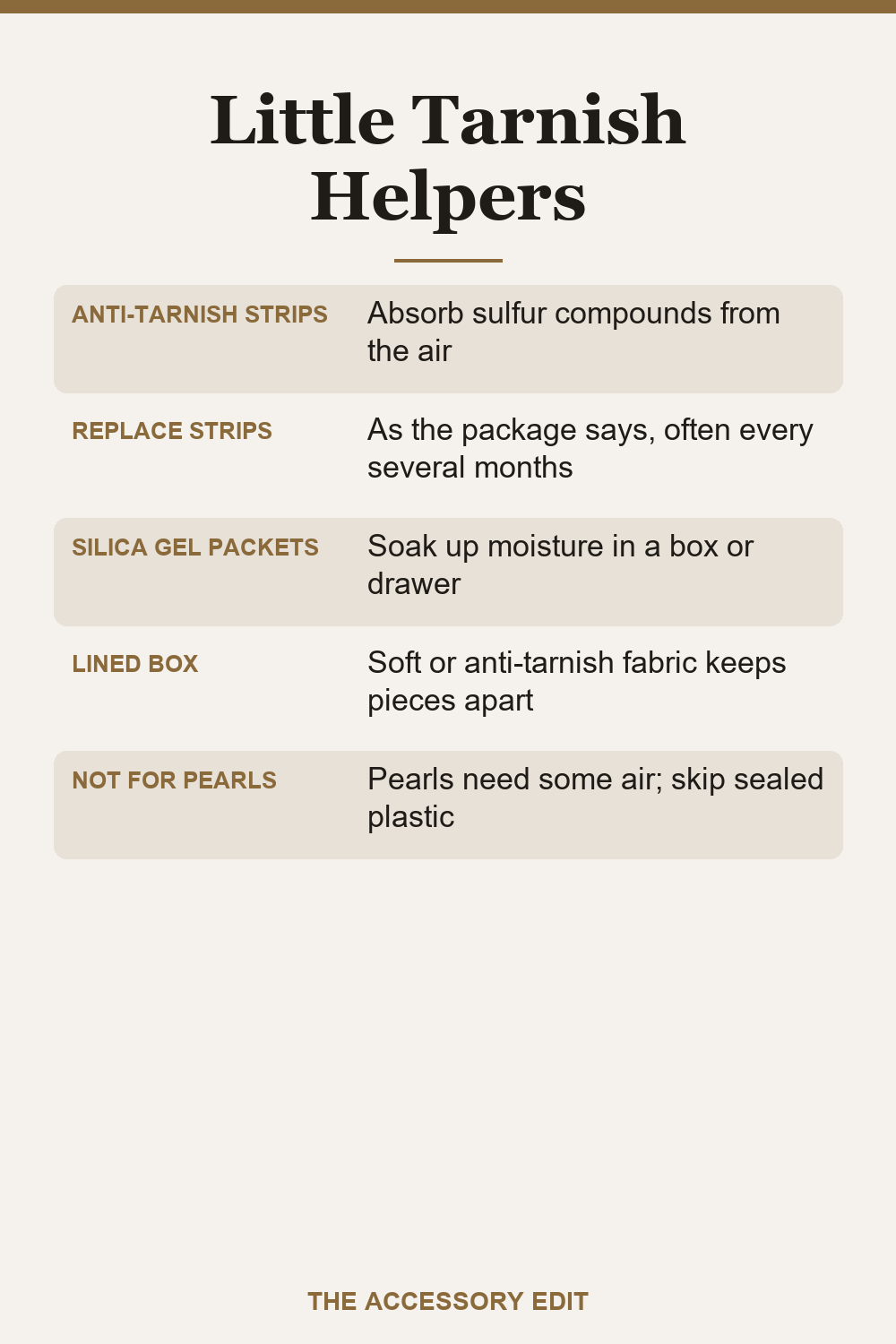
The card above lists the little helpers that slow tarnish and when to replace them. They absorb the things that cause tarnish.
Anti-tarnish strips: treated paper strips that absorb sulfur compounds from the air. Replace them as directed on the package, often every several months.
Silica gel packets: absorb moisture. Save the ones that come in shoe boxes and other packaging.
Tip: a piece of chalk in a jewelry box is a common home trick for absorbing moisture, though purpose-made strips are more reliable.
4. Choose a lined jewelry box
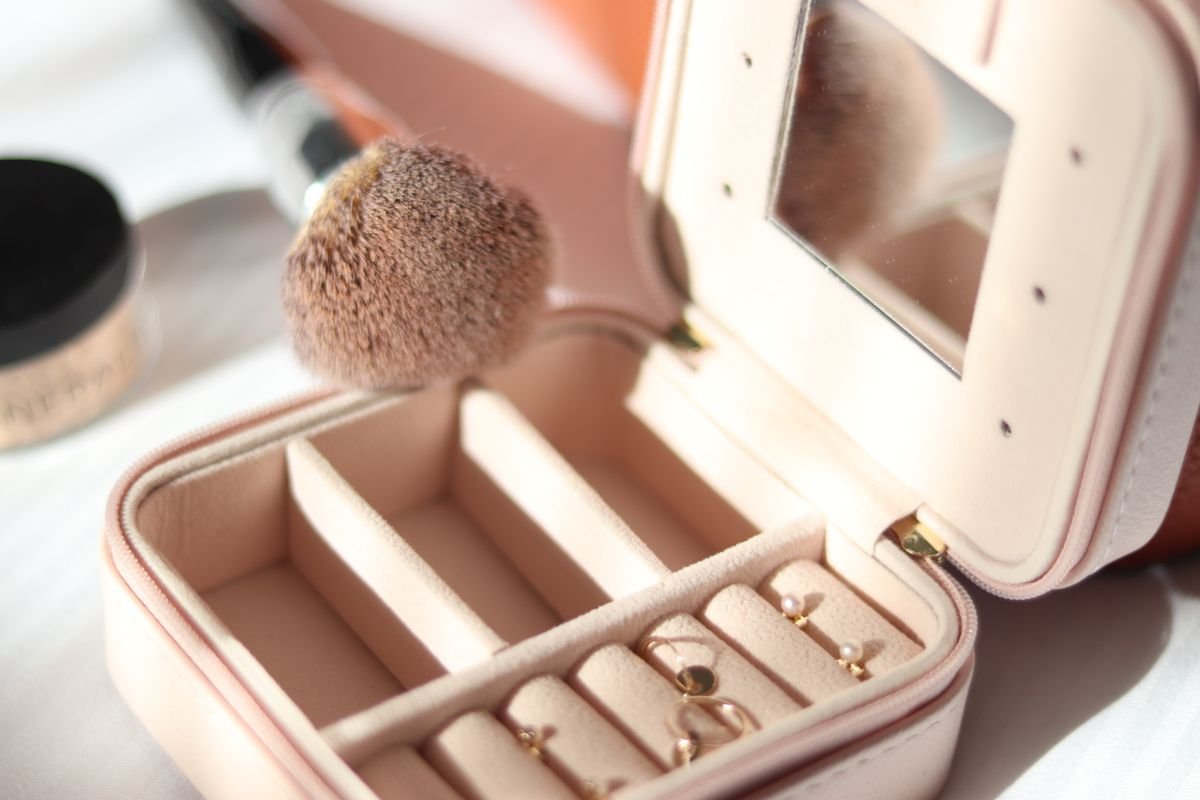
In this photo a pink jewelry box is open to show soft lined compartments for rings and earrings. Look for a box like this, ideally with anti-tarnish fabric lining and hooks for necklaces. A good box keeps pieces separate, protected from light and dust, and away from each other.
What to look for: anti-tarnish or soft fabric lining, separate compartments and a lid that closes snugly.
Tip: felt and some woods can contain substances that speed up tarnish; boxes with a dedicated anti-tarnish lining are a safer choice for silver.
5. Keep jewelry out of the bathroom
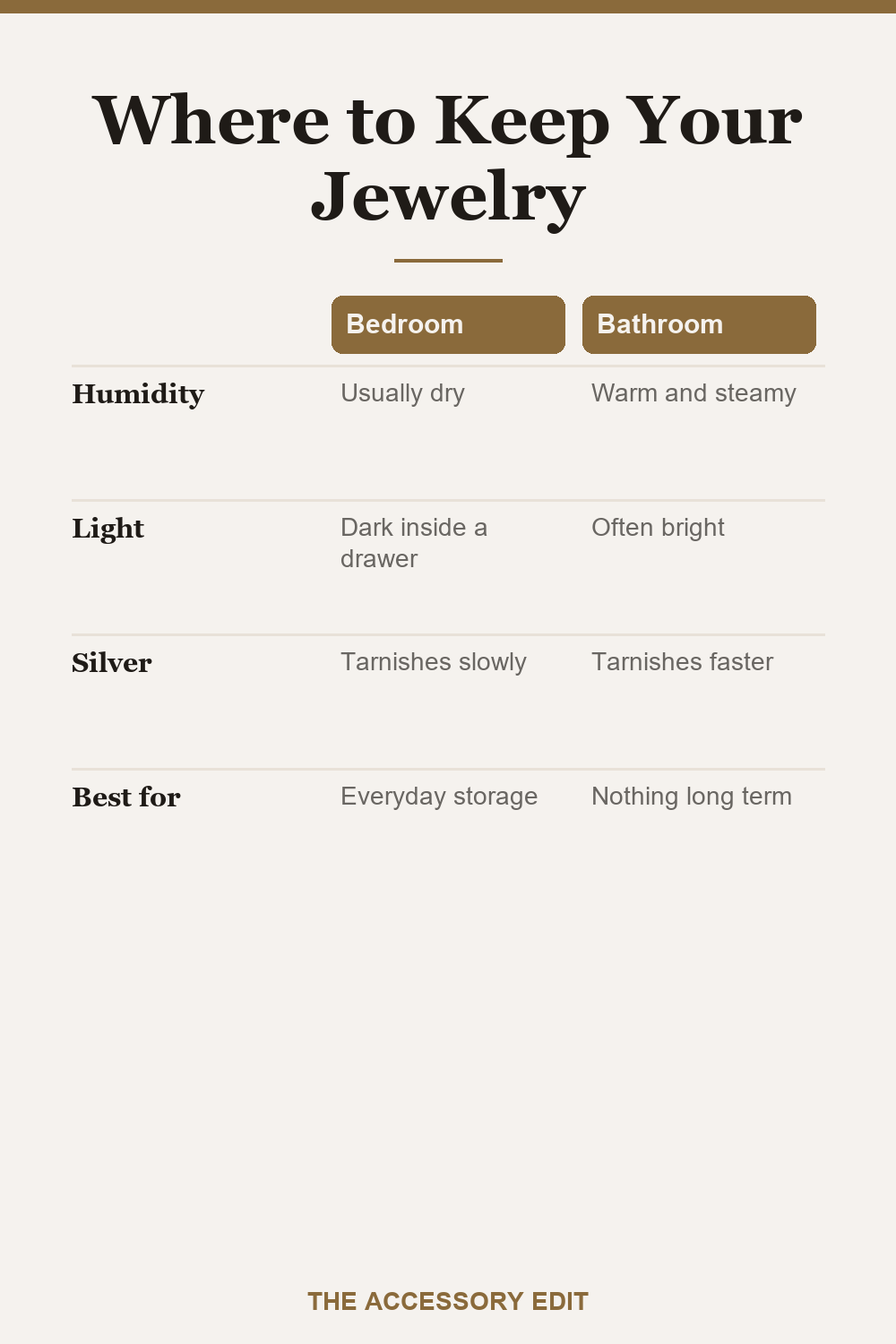
The comparison above shows why the bathroom is the wrong place for a jewelry dish. Bathrooms are warm and humid, which is one of the worst environments for silver.
How to do it: store jewelry in a bedroom or closet, ideally in a drawer that stays cool, dry and dark.
Tip: if you take jewelry off in the bathroom, use a small dish and move it to its proper storage afterwards.
6. Wear your silver often
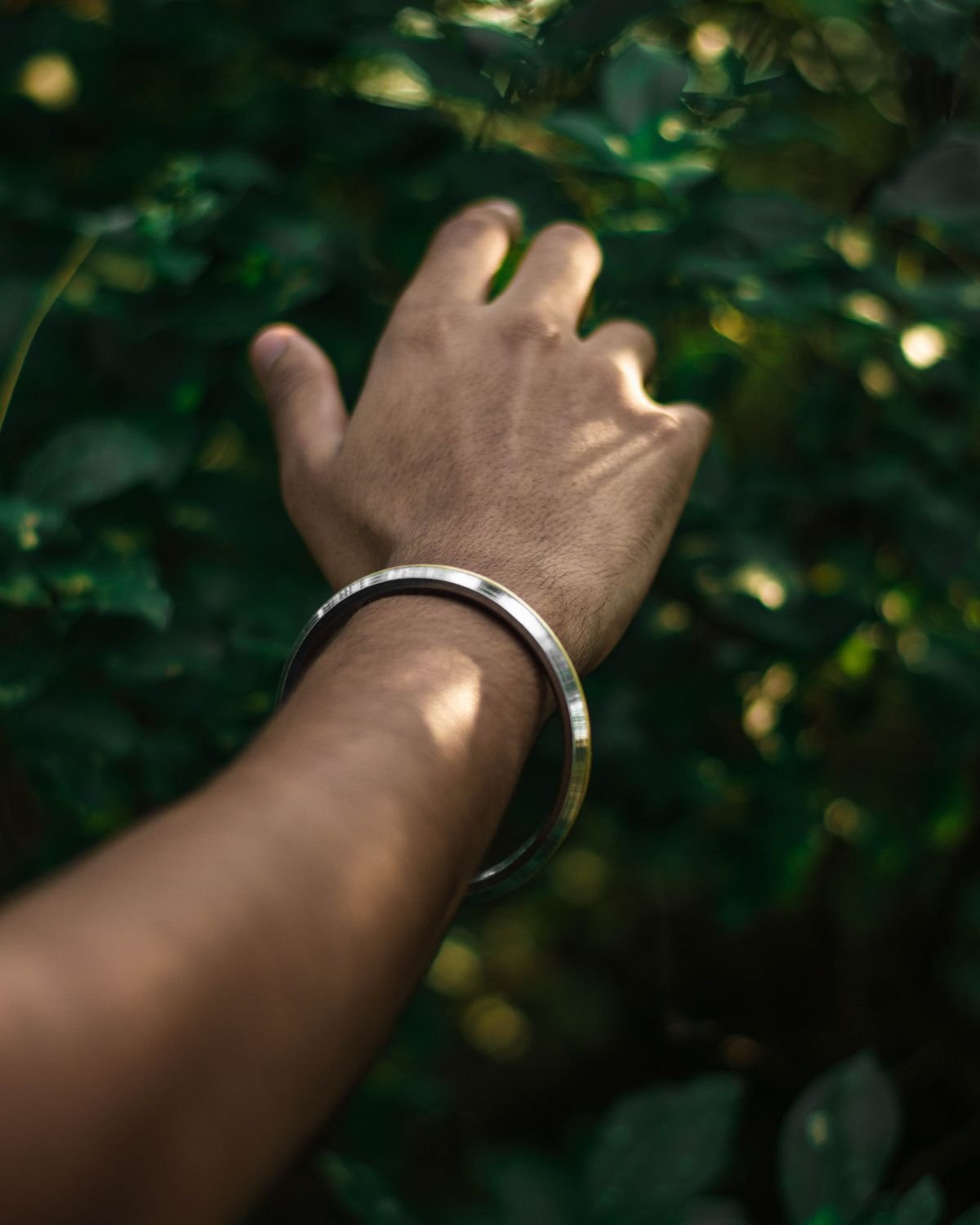
The last photo shows a wrist wearing a polished silver bangle outdoors. It sounds surprising, but jewelry that’s worn and wiped regularly often tarnishes less than pieces left in a drawer for months.
Why it helps: gentle friction from wearing and wiping removes the early stages of tarnish before they build up.
But remove it for: swimming, cleaning with household chemicals, applying lotion or perfume, and exercise.
Tip: put jewelry on last when getting ready, after lotion, makeup, hairspray and perfume.
Storage by type of jewelry
Different pieces need slightly different care. Once the basics above are in place, these extra tips help each type last longer.
Sterling silver: the metal most prone to tarnish. Airtight bags with an anti-tarnish strip are the most effective storage. Wipe pieces with a silver polishing cloth before storing.
Gold-plated and vermeil: the thin gold layer can wear away or discolor. Store separately so pieces don’t rub, avoid water and perfume, and wipe gently with a soft dry cloth.
Fine chains: hang them on hooks or lay them flat in separate compartments. A chain threaded through a drinking straw with the clasp fastened outside won’t tangle when you travel.
Pearls: pearls need some moisture in the air, so they shouldn’t be sealed in airtight plastic for long periods. Store them flat in a soft pouch, away from other jewelry that could scratch them.
Earrings: keep pairs together in small compartments or on an earring card, so one doesn’t go missing and posts don’t scratch other pieces.
Costume jewelry: base metals can discolor quickly with moisture. Keep pieces dry and store them separately from fine jewelry.
For example: a simple setup could be a lined box for everyday gold pieces, a drawer of small labeled zip bags with anti-tarnish strips for silver, and a soft pouch for pearls, all kept in a bedroom drawer.
How to store jewelry to prevent tarnish: checklist
- Wipe and dry pieces before storing.
- One piece per small airtight bag.
- Add anti-tarnish strips or silica gel packets.
- Use a lined box with separate compartments.
- Store in a cool, dry place, not the bathroom.
- Wear silver often; take it off for water and chemicals.
You might also like
FAQ
What causes jewelry to tarnish?
Mainly a reaction between metals like silver and sulfur compounds in the air, sped up by moisture, heat, and contact with lotions and chemicals.
Do zip bags really prevent tarnish?
They help a lot by limiting air and moisture. Adding an anti-tarnish strip inside works even better.
Does gold tarnish?
Pure gold doesn’t tarnish, but lower-karat gold alloys and gold-plated pieces can discolor over time.
Spend ten minutes setting up bags and strips this weekend, and your silver will stay bright much longer.
Leave a Reply