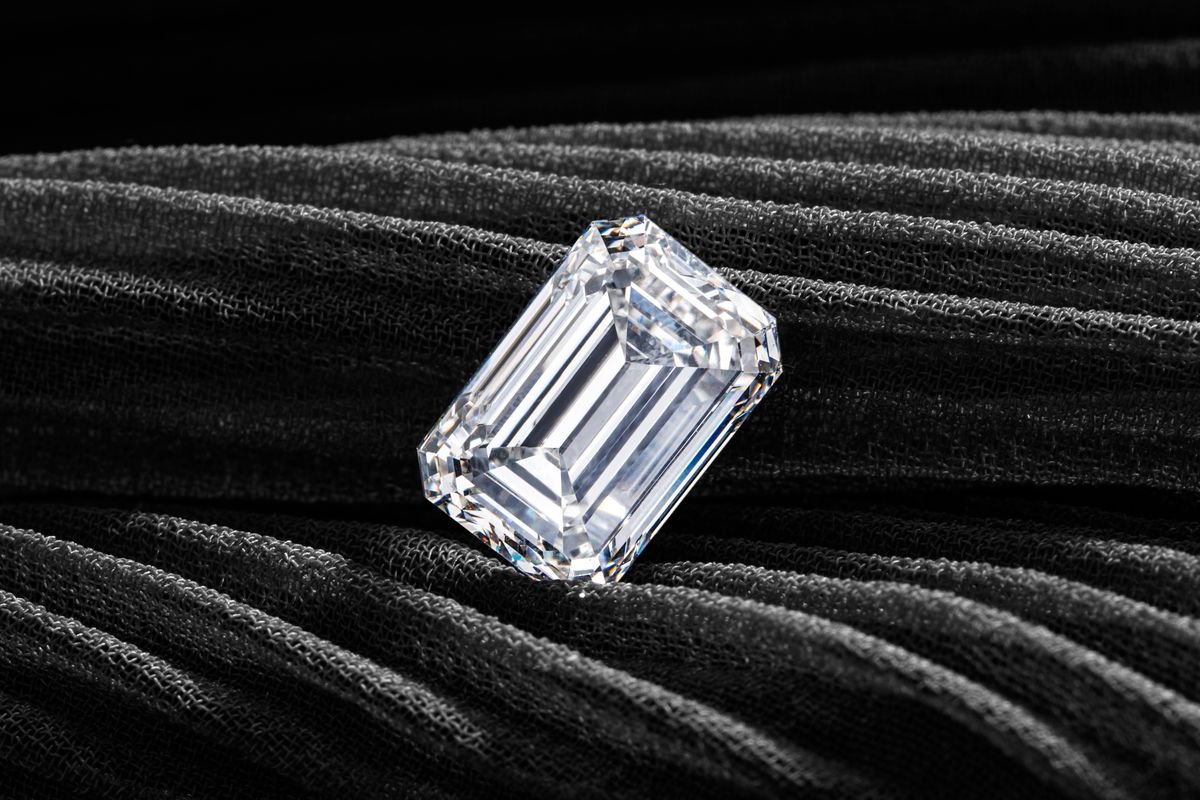
If round diamonds feel too expected and you love clean lines, the emerald cut is probably already on your list. Instead of tiny sparkly flashes, it shows broad, glassy flashes of light, a look many people describe as calm, elegant and a little bit vintage. It is also climbing in Pinterest Trends right now.
Before you fall for a style, it helps to know what makes this cut different. According to the GIA (Gemological Institute of America), an emerald cut has a rectangular outline with bevelled corners and rows of long, rectangular facets. Those long facets make inclusions easier to see than in many other cuts, and because the cut gives less sparkle, the diamond’s colour shows more too. So clarity and colour deserve extra attention when you shop.
Below are six emerald cut engagement ring styles, what you see in each picture and how to choose or style that look yourself.
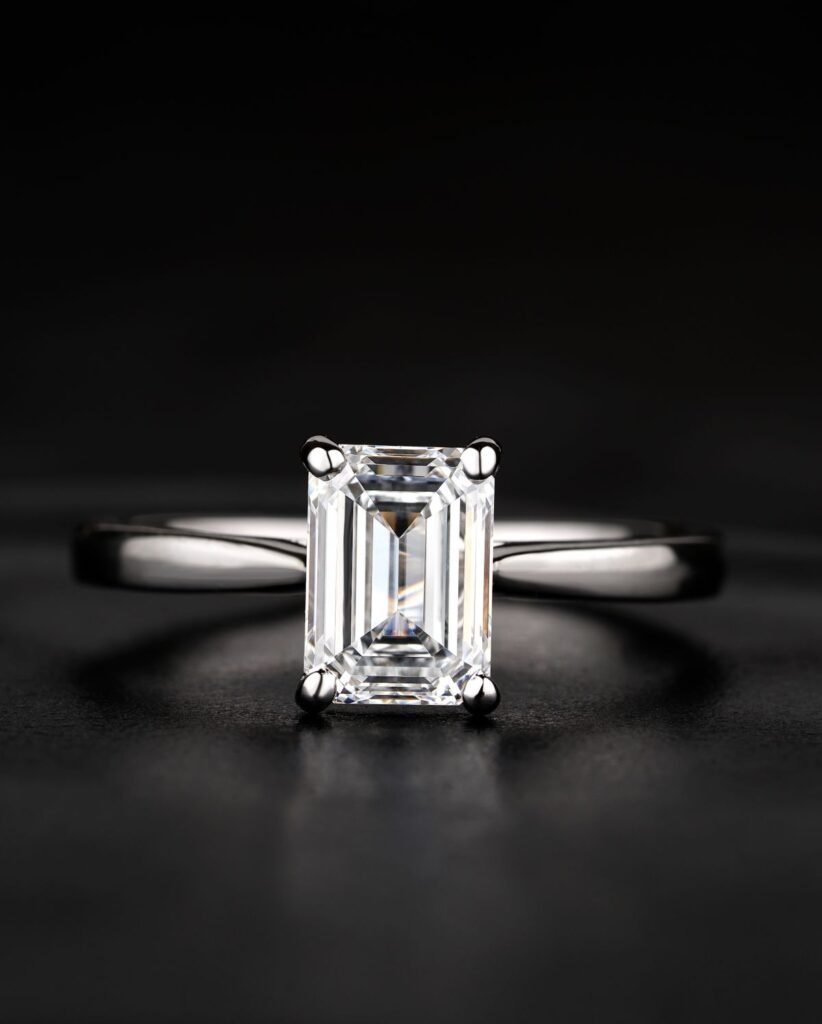
1. The Classic Emerald Cut Solitaire
The picture shows the purest version of the look: one emerald cut diamond held by four claw prongs on a thin, plain platinum band, standing upright on cream linen. Nothing competes with the stone, so its long step facets and clean rectangle do all the talking. A slim band also makes the centre stone look a little larger by contrast.
How to choose it: ask to see the stone face-up under ordinary room light, not only under the bright spotlights at the jewelry counter. Look at the open “window” in the middle of the stone: with so few facets to hide anything, a dark spot or cloud there is easy to notice. If you can, compare two stones side by side so you get a feel for what clean looks like.
For example: if you wear rings every day and work with your hands, a lower-profile setting sits closer to the finger and is less likely to catch on sweaters and gloves.
Tip: claw prongs at the corners protect the bevelled corners of the stone. Have a jeweler check that they are snug once or twice a year.

2. Emerald Cut with Tapered Baguettes
Here the emerald cut centre stone sits between two tapered baguettes, small rectangular side stones that narrow toward the band, shown in an open dark green velvet ring box. Because baguettes are also cut with long, straight facets, they echo the centre stone instead of competing with it. The result looks tailored and a little old-Hollywood.
How to choose it: look at the ring from the side and from above. The side stones should line up neatly with the centre stone and match it closely in colour, otherwise the difference stands out in this clean design. Ask whether the baguettes are set in prongs or in a channel; a channel setting is smoother to touch.
For example: this style suits someone who wants a ring that looks finished on its own, without needing a stacked wedding band later.
Tip: try it on before deciding. Side stones add width across the finger, which looks lovely on longer fingers but can feel busy on very small hands.
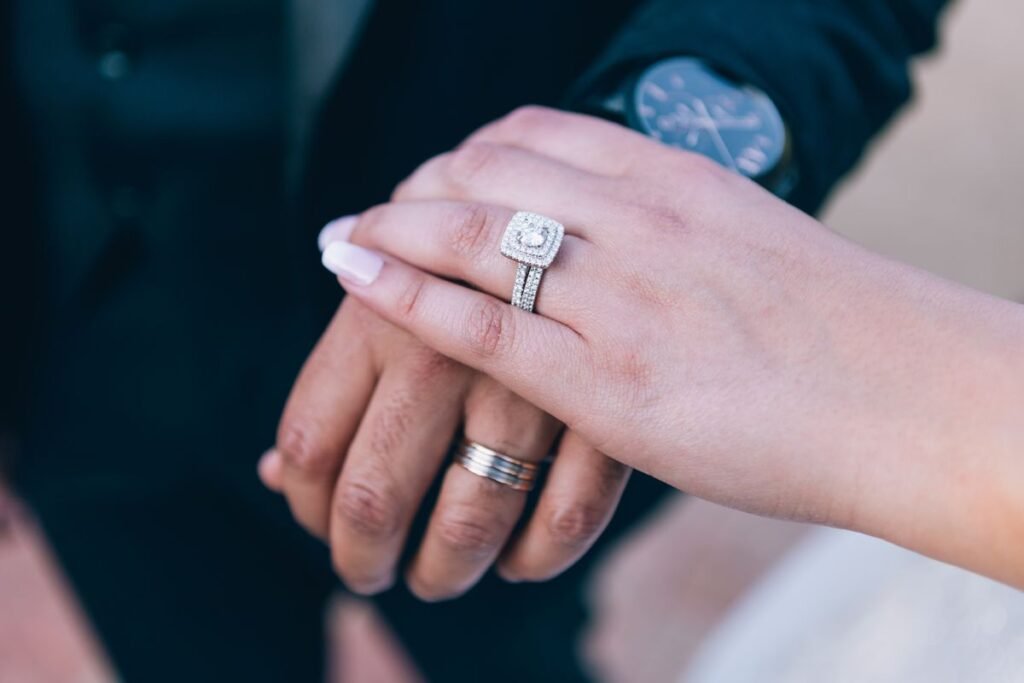
3. Emerald Cut on a Pave Band
In this photo, the emerald cut centre stone sits on a band lined with small pave diamonds, resting on ivory satin between soft white rose petals. The tiny round diamonds along the band add the twinkle that an emerald cut does not have on its own, so you get both looks in one ring: calm flashes in the middle and sparkle around it. GIA notes that brilliant-cut side stones can play a supporting role by drawing the eye toward the centre stone.
How to choose it: decide how far the pave should go. Half-way around the band is common and easier to resize later; all the way around looks luxurious but is harder to resize.
For example: if you love sparkle but also love the shape of an emerald cut, this is a good middle ground, and a matching pave wedding band can be added later.
Tip: pave stones collect lotion and soap. Soaking the ring in warm water with a drop of mild dish soap and brushing gently with a soft toothbrush keeps it bright.
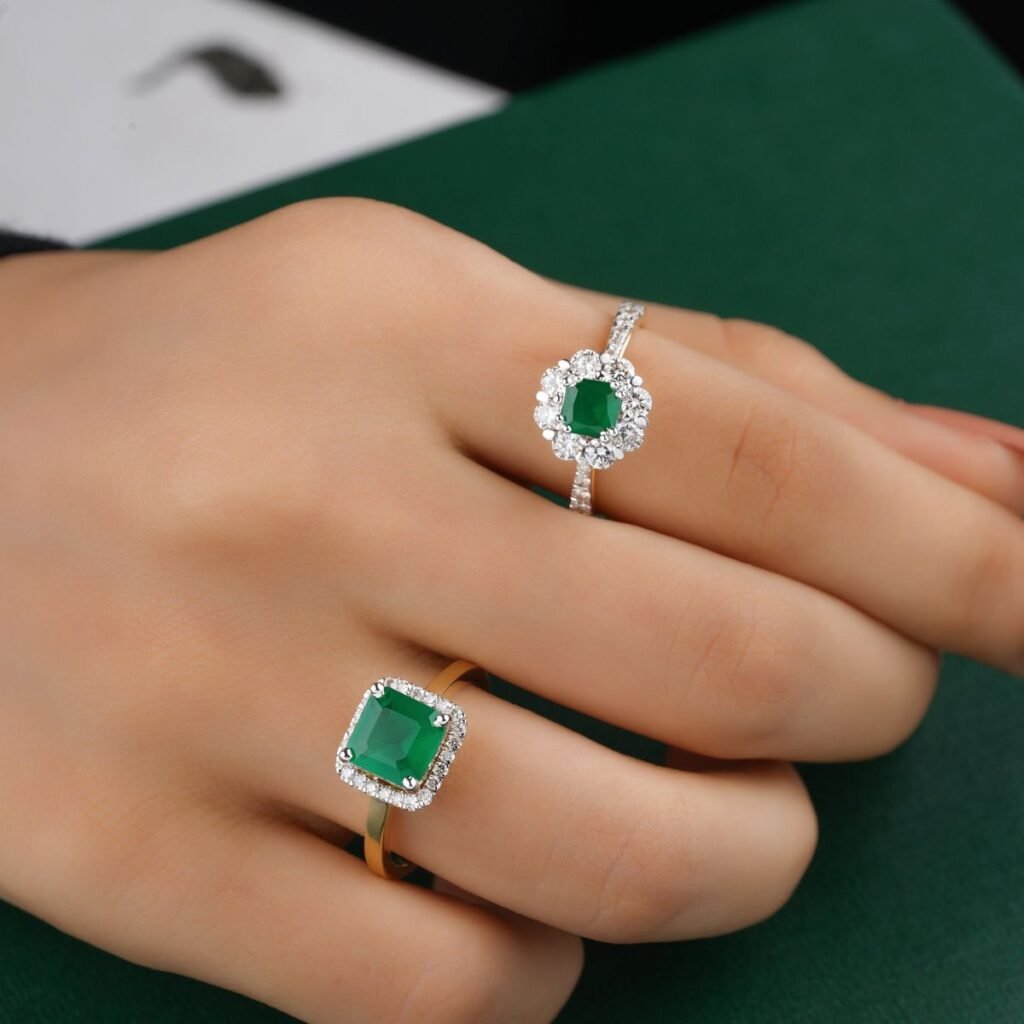
4. East-West Emerald Cut in Yellow Gold
This picture shows the emerald cut turned sideways, set horizontally across a warm yellow gold band and resting on a smooth stone with dried flowers behind it. GIA describes this horizontal “east-west” setting as a less traditional way to wear the cut. It looks modern and minimal, and it suits people who already wear a lot of simple gold jewelry.
How to choose it: put the ring on and look at your hand in a mirror from a normal distance. Turned sideways, the stone covers more of the width of the finger, which flatters shorter fingers and looks clean beside a thin gold band. Check the prongs too: a low setting fits this relaxed style best.
For example: pair it with a thin gold chain bracelet and small gold hoops for an everyday look that still feels special.
Tip: yellow gold reflects a warm tint into the diamond. If you are choosing a stone for a yellow gold setting, look at it in that metal before you decide, because the metal changes how the colour reads.
5. The Emerald Cut Bridal Set
Here an emerald cut engagement ring sits stacked with a thin diamond eternity band in a small white stone ring dish on a marble vanity. Pairing the two from the start means the bands are made to sit flush, with no awkward gap between the rings. A straight band like this one matches the straight lines of the emerald cut.
How to plan it: if you are buying the engagement ring first, ask the jeweler whether a straight band will sit flush against it, or whether the setting is too low and needs a curved or notched band. Bring the engagement ring with you when you shop for the wedding band later, and try them together on your finger.
For example: a platinum emerald cut solitaire with a thin eternity band in platinum looks seamless; a plain gold band beside it gives a softer, mixed-metal look.
Tip: keep a small ring dish by the sink and the bed. Most rings get lost when they are taken off in a hurry and left on a counter.

6. An Art Deco Inspired Emerald Cut
The last picture shows a vintage-style ring: an emerald cut centre stone framed by small step-cut side stones, with fine beaded milgrain detail along the platinum setting, displayed on cream lace beside an old brass hand mirror. GIA points out that the angular shape of the emerald cut suits vintage-inspired Art Deco mountings, with their geometric lines and symmetry.
How to find it: you can look for a true antique piece at a reputable estate jeweler or choose a new ring made in a vintage style. Either way, ask about the ring’s history and condition, and have the prongs and any old repairs checked before you buy.
For example: if you love old films, lace details or vintage dresses, this style ties your ring to the rest of your wedding look.
Tip: milgrain and engraving are delicate. Ask the jeweler how to clean the ring and plan regular check-ups so the detail stays crisp.
How to choose the right emerald cut ring for you
Start with the style that matches the jewelry you already wear every day: a simple solitaire for minimal tastes, baguettes or an Art Deco look for a bit of drama, pave for extra sparkle, east-west for something modern. Then look at the stone itself in normal light, because this cut shows its clarity and colour more openly than most. Take your time, compare a few stones side by side and choose the one you keep coming back to. Save this list for when you start ring shopping.

Leave a Reply