
Layered necklaces look effortless when they’re done well: two or three delicate chains falling at different lengths, each one adding something without crowding the others. Done badly, they tangle, sit on top of each other and look like a knot. The difference is mostly about length, weight and spacing. This guide on how to layer necklaces covers six simple rules and combinations, with what to choose for each layer, how to keep them from tangling and which necklines they suit.
The short answer: start with two or three necklaces about 2 inches apart in length (for example 16, 18 and 20 inches), mix chain thicknesses (one fine, one medium), add one pendant as a focal point, stick to one metal (or mix on purpose), and use a necklace spacer or layering clasp to stop tangles.
1. Space the lengths about 2 inches apart
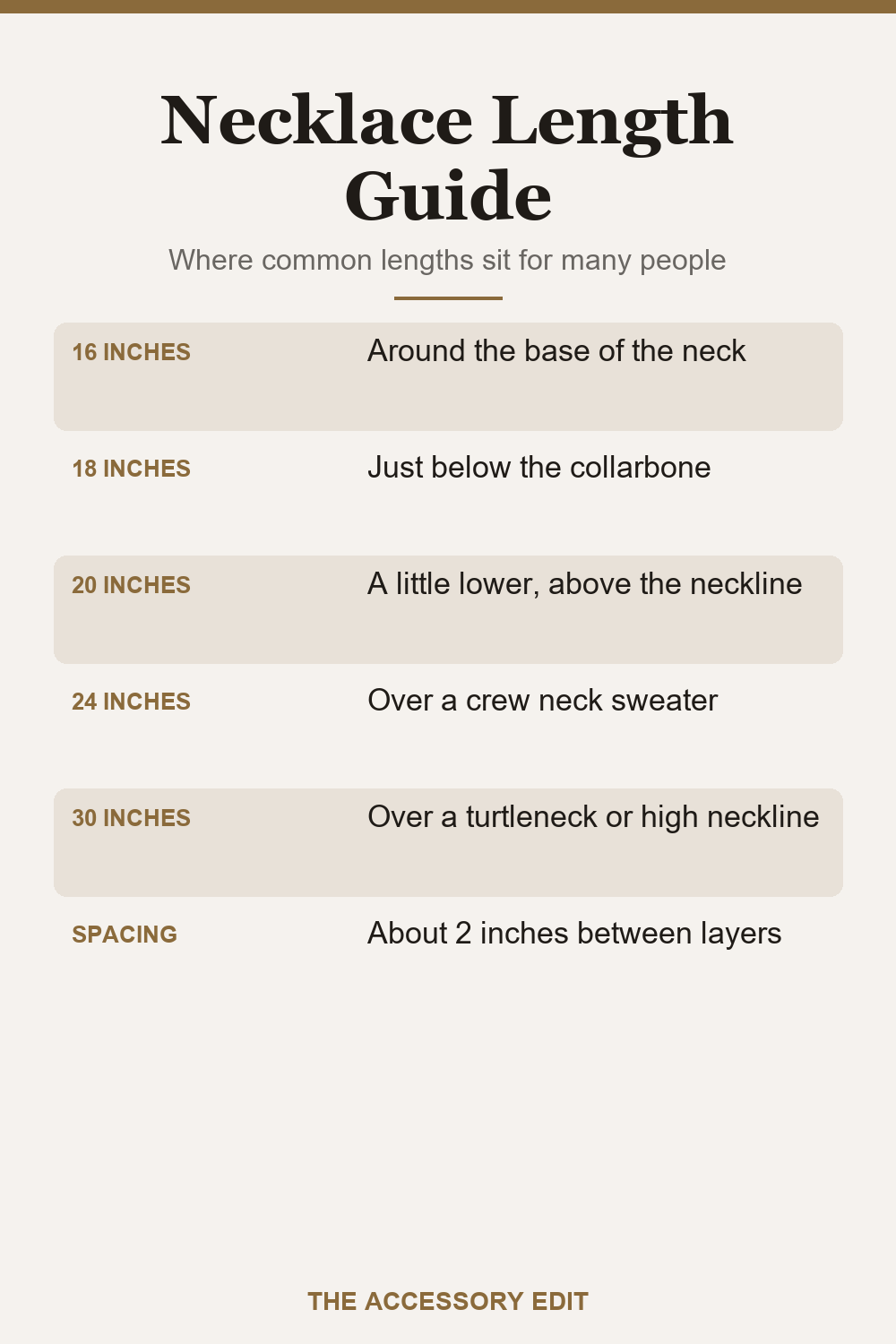
The length guide above shows where the most common necklace lengths sit for many people. When each necklace has its own space, the layers read as a set rather than a tangle.
How to do it: choose lengths about 2 inches apart. Common lengths are 16 inches (around the base of the neck for many people), 18 inches (just below the collarbone) and 20 inches (a little lower).
Tip: how a length sits depends on your neck and build. Try necklaces on, or use a piece of string to test where each length falls.
2. Mix chain thickness and texture
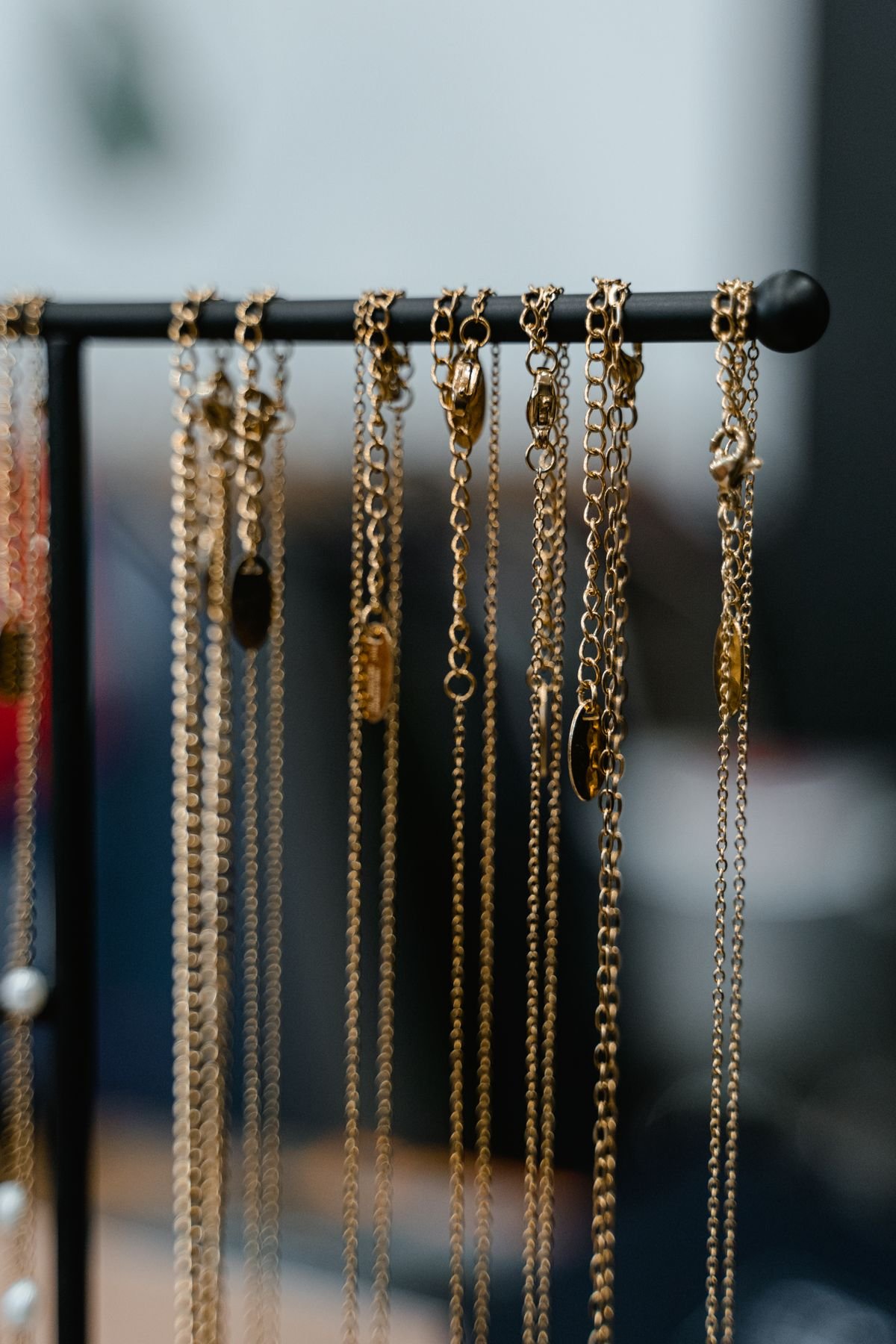
Here gold necklaces in different chain styles hang side by side on a jewelry rack, from very fine cable chains to chunkier links. For a set, pick three: a fine cable chain, a medium paperclip chain and a slightly chunkier rope chain. Mixing textures adds interest, and slightly different weights help each chain hang in its own place.
How to do it: put the finest chain at the top (shortest) and the heaviest at the bottom (longest), or keep the heaviest in the middle as a statement.
Tip: two chains of exactly the same thickness and style can look like one tangled chain from a distance. Vary them.
3. Choose one focal pendant
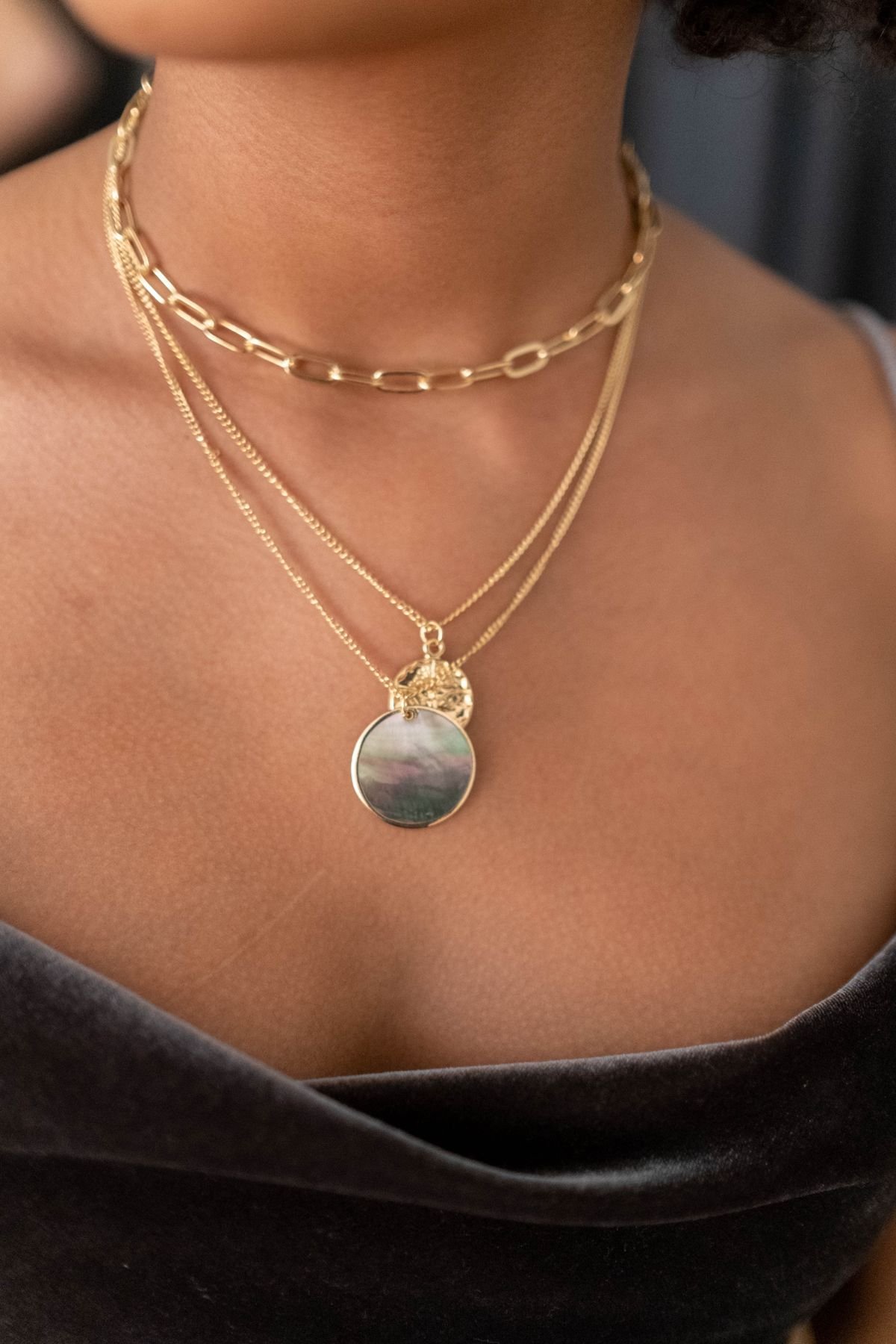
This picture shows a layered set on a neckline: fine plain chains with one longer chain holding a round coin pendant. One pendant gives the eye somewhere to rest, while the plain chains frame it.
How to do it: let one necklace carry the pendant (an initial, a birthstone, a coin or a small charm) and keep the others plain or with tiny details.
Tip: put the pendant on the middle or longest chain so it hangs freely.
4. Match the layers to your neckline
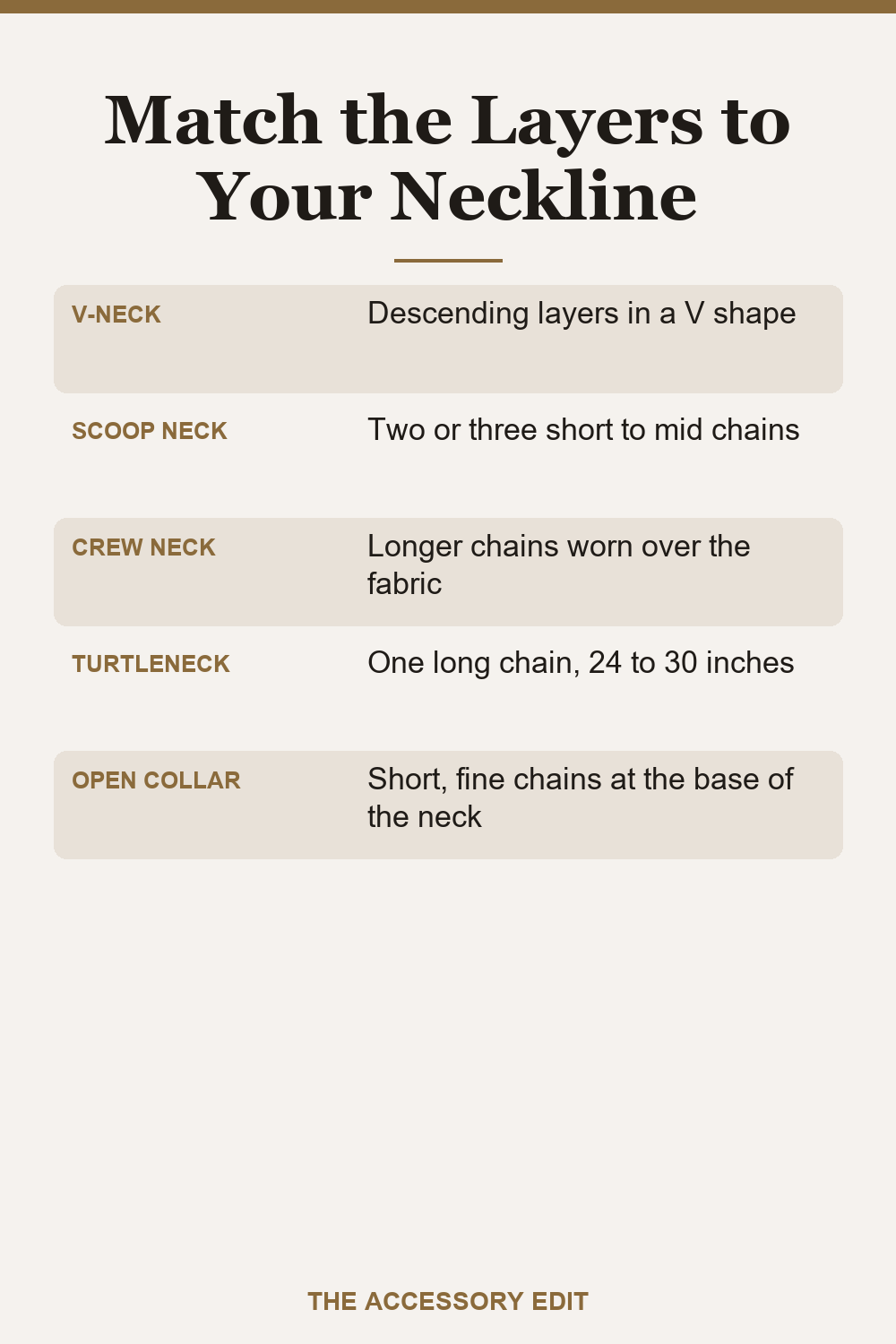
The card above pairs five common necklines with the layers that suit them. Necklines change which lengths look best.
V-neck and scoop neck: descending layers that follow the shape of the neckline.
Crew neck and turtleneck: longer chains (20 to 30 inches) worn over the top of the fabric.
Open collar or button-down: short, fine chains that sit at the base of the neck.
Tip: very short chokers can compete with high necklines; save them for open necklines.
5. Stick to one metal, or mix on purpose
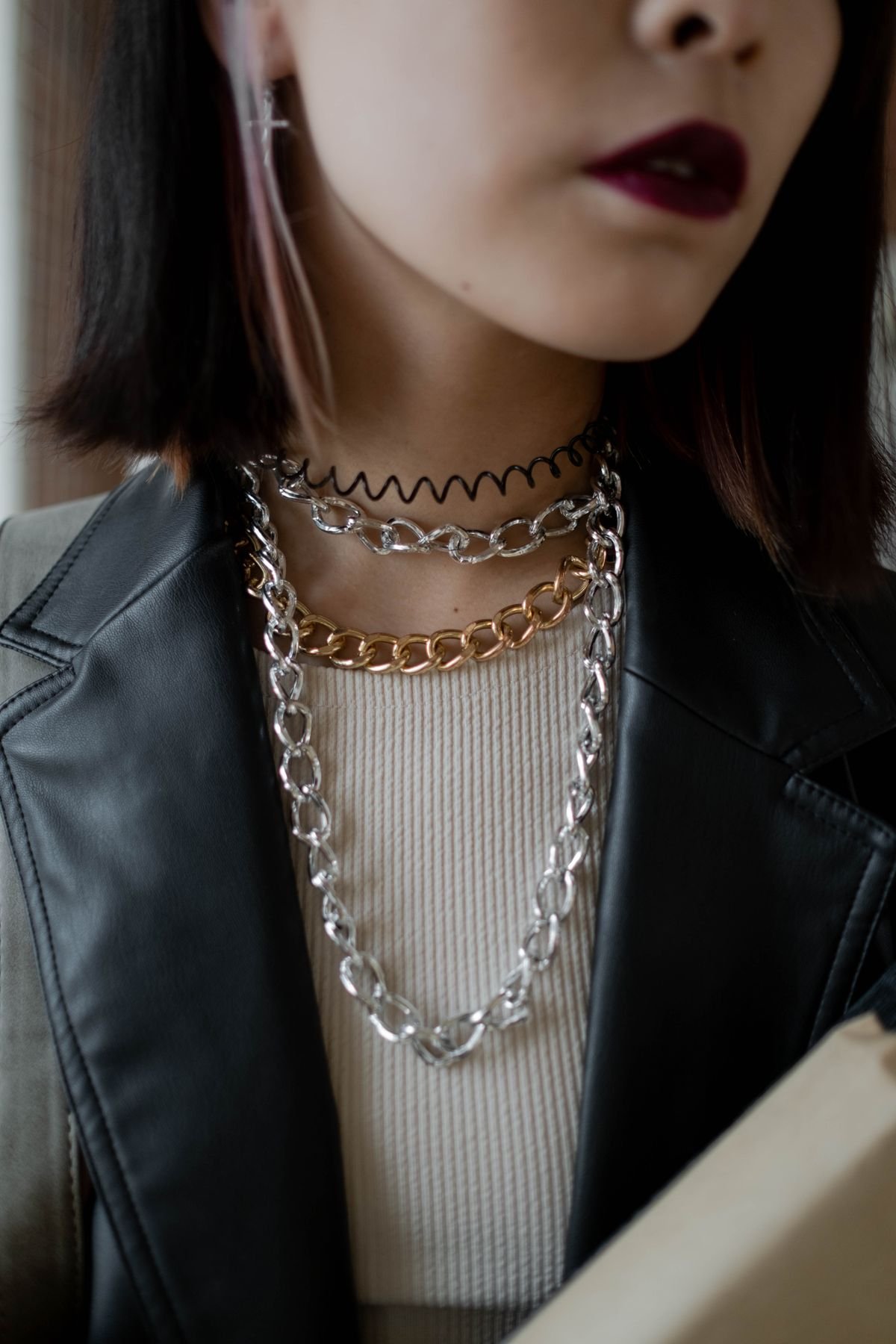
Here a chunky silver chain is layered with finer gold chains over a ribbed top, a mixed-metal look that works because the contrast is clearly on purpose. An all-gold set is the calmer option. Both work, as long as the choice looks deliberate.
One metal: classic, calm and easy to match with earrings and rings.
Mixed metals: modern and relaxed. It looks most intentional when one piece combines both metals, or when you repeat both metals in your rings or earrings.
Tip: if you’re unsure, start with one metal and add a second later.
6. Stop the tangles
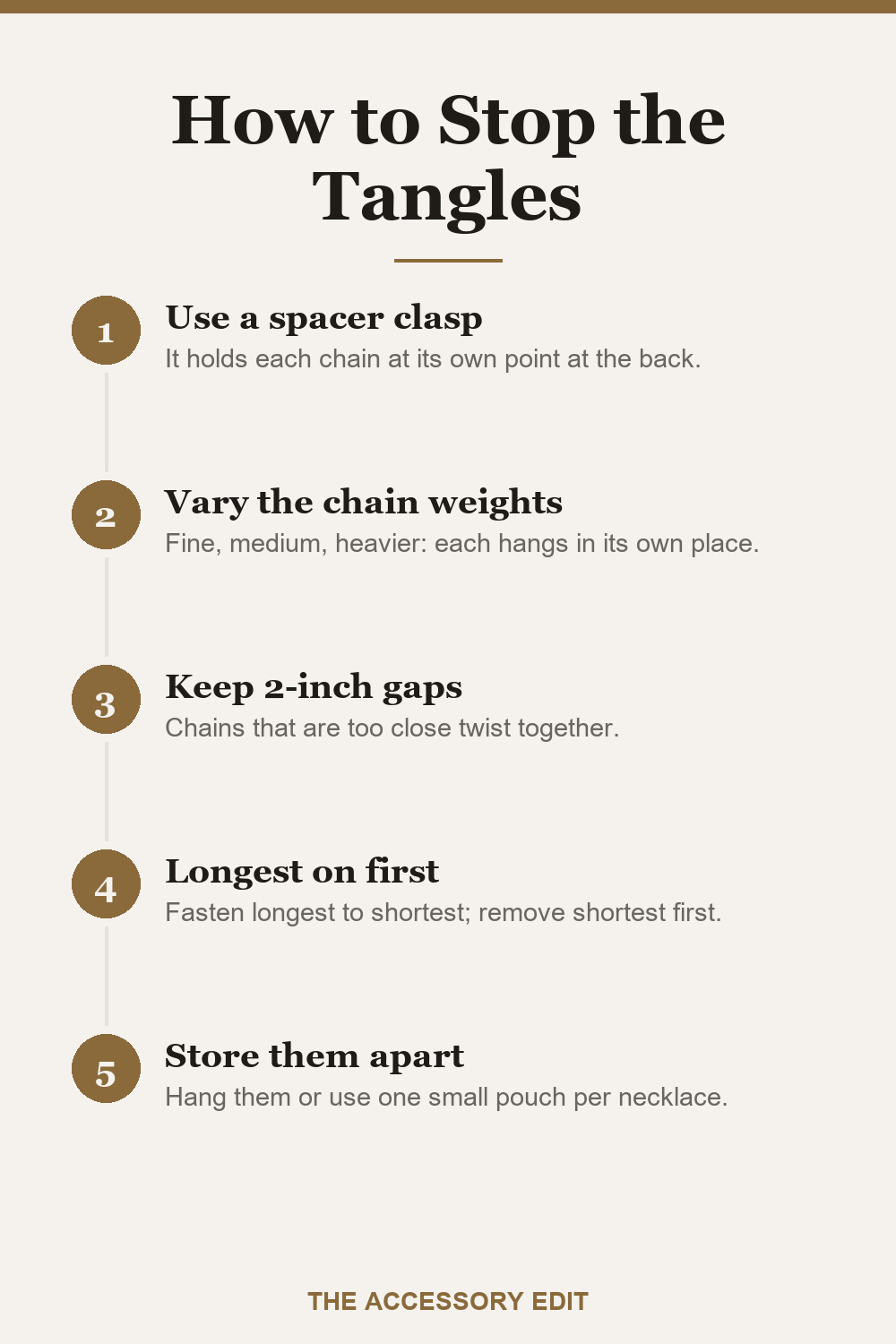
The five steps above are the quickest ways to keep layered chains apart. Tangling is the biggest frustration with layered necklaces, and there are easy fixes.
How to prevent tangles: use a necklace spacer or layering clasp, which holds each chain at a separate point at the back. Choose slightly different chain weights, and keep length gaps of about 2 inches.
Storing them: hang necklaces separately or store each one in its own small pouch so they don’t knot in a drawer.
Tip: if a fine chain knots, lay it flat and use two pins to gently work the knot loose; a drop of baby oil can help on stubborn knots, wiped off afterwards.
Three necklace stacks to copy
Here are three easy combinations that follow the rules above. Each uses chains many people already own.
The everyday trio: a 16-inch fine cable chain, an 18-inch chain with a small initial or round pendant, and a 20-inch paperclip chain. It suits V-necks and scoop necks and works for both the office and the weekend.
The simple pair: a 16-inch fine chain with a tiny stone and an 18-inch slightly thicker chain with no pendant. It’s the easiest way to start layering, and it’s hard to get wrong.
The sweater stack: a 24-inch chain with a coin pendant and a 30-inch thin rope chain, worn over a crew neck or turtleneck. Longer lengths keep the necklaces visible over winter knits.
Putting them on without tangles: fasten the longest necklace first, then the next longest, ending with the shortest. Taking them off, start with the shortest. This order keeps the clasps from catching on each other.
Traveling with layered necklaces: thread each chain through a drinking straw and fasten the clasp outside it, or lay them flat between two pieces of soft cloth in a small case.
Tip: an extender chain lets you adjust a necklace by an inch or two, which makes it easier to get the spacing just right.
Common layering mistakes (and easy fixes)
All the chains are the same length. They tangle within minutes and blur into one thick line. Fix: keep about two inches between each layer, or add an extender to one of them.
Every necklace has a pendant. Two or three pendants compete and knock into each other. Fix: keep one pendant and make the other layers plain chains.
The chains are all very fine. Three delicate cable chains can look like one tangle from a distance. Fix: swap one for a slightly thicker paperclip, rope or bead chain so each layer reads separately.
The stack fights the neckline. A short choker under a high crew neck disappears, and long chains get lost in a deep V. Fix: let the neckline set the lengths, as in the guide above.
Too much at once. Statement earrings, a stacked bracelet set and five necklaces can be a lot. Fix: when your necklaces are the focus, keep earrings small and simple.
Caring for layered chains
Fine chains wear faster when they rub against each other all day, so take them off before sleeping, showering or exercising. Wipe them with a soft cloth after wearing to remove skin oils and lotion, and store each chain separately, either hanging or in its own small pouch, so they don’t knot together in a drawer.
How to layer necklaces: quick rules
- Two or three necklaces, about 2 inches apart in length.
- Mix chain thicknesses and textures.
- One focal pendant; keep the rest simple.
- Match the lengths to your neckline.
- One metal, or mix on purpose.
- Use a spacer clasp to prevent tangles.
You might also like
FAQ
What lengths are best for layering necklaces?
A common starting point is 16, 18 and 20 inches, about 2 inches apart, but adjust for your neck and neckline.
How many necklaces should I layer?
Two or three is easiest. More can work with very fine chains, but it’s harder to keep them from tangling.
Can you layer gold and silver necklaces?
Yes. Mixing metals looks intentional when one piece combines both, or when you repeat both metals in your other jewelry.
Start with two chains you already own, add one pendant, and adjust the lengths until each one has its own space.

Leave a Reply