
Ordering a ring online, or planning a surprise proposal, starts with one small number that is surprisingly easy to get wrong: the ring size. Too tight and the ring is uncomfortable; too loose and it spins or slides off. You don’t need to visit a jeweler to get a good estimate. You just need a little care and the right method.
The short answer: here is how to find your ring size at home: wrap a string or paper strip around the base of your finger, mark where it overlaps, measure the length in millimeters, and compare it with the size chart of the jeweler you are buying from. If you have a ring that already fits, measure its inside diameter instead. Measure at the end of the day, when your fingers are warm, and make sure the size can still slide over your knuckle.
Below are four methods, from quickest to most accurate, plus two fit checks. If the ring is an engagement ring, our guide to emerald cut engagement rings can help with choosing the style too.
How to find your ring size at home: before you measure
- Measure the right finger and hand. Fingers on your dominant hand are often slightly larger.
- Pick the right time. Fingers can change size with temperature and through the day, so measure when your hands are at a normal, warm temperature, not straight after being outside in the cold.
- Use the seller’s chart. Ring sizes are not the same in every country (US, UK and EU systems differ), so always convert using the chart of the shop you are buying from.
- Measure two or three times. If the results differ, use the average or the larger one.
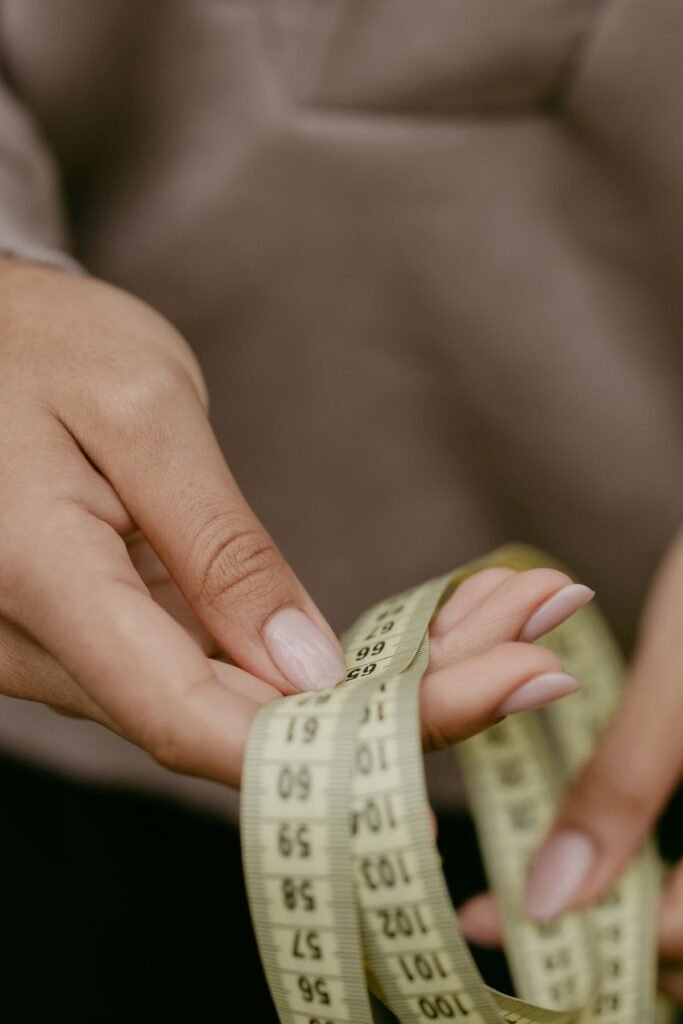
Method 1: The String Method
This photo shows a thin white string wrapped once around the base of the ring finger, with the other hand holding the ends together. It is the quickest method, and you can do it with things you already have at home.
How to do it: wrap a non-stretchy string snugly around the base of your finger, where the ring will sit. It should be firm but not tight. Mark the point where the string meets itself with a pen, then unwrap it and measure the length from the end to the mark with a ruler, in millimeters. That number is the circumference of your finger.
For example: if your string measures a certain number of millimeters, look for that circumference on the jeweler’s size chart and read across to the matching ring size.
Tip: string can stretch or slip. Use dental floss or thin cotton thread, and measure more than once.
Method 2: The Paper Strip Method
This picture shows a narrow strip of plain paper wrapped snugly around a finger, with a pencil ready on the desk. Paper doesn’t stretch, so it is usually a little more reliable than string.
How to do it: cut a strip of paper about half a centimeter wide and a few inches long. Wrap it around the base of your finger, mark where the end overlaps, and measure from the end to the mark in millimeters. Compare with the jeweler’s chart, just like the string method.
For example: if you plan to buy a wide band, cut a wider strip of paper, about the width of the band, so the measurement matches how the ring will feel.
Tip: check that the paper slides over your knuckle when you pull it off. If it won’t, the size you measured will be too small to put on.
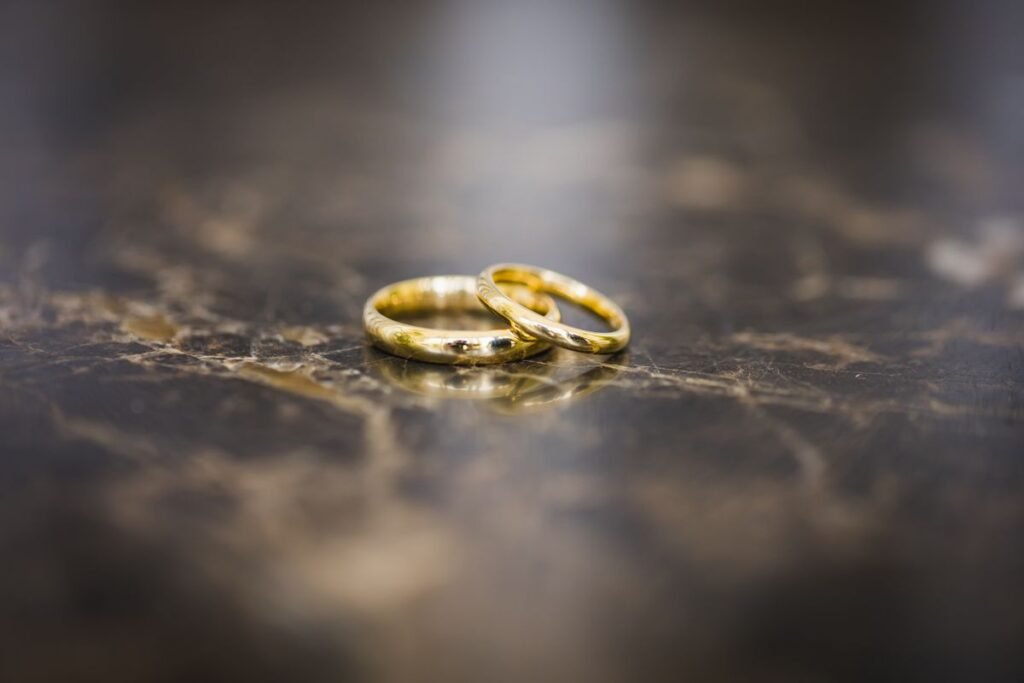
Method 3: Measure a Ring That Already Fits
This photo shows a plain gold band lying on a white surface above a metal ruler marked in centimeters and millimeters. If you already own a ring that fits the right finger, this is often the most accurate home method.
How to do it: lay the ring flat and measure the inside diameter, from inner edge to inner edge across the widest point, in millimeters. Don’t include the metal of the band itself. Many jewelers list inside diameter on their size charts next to each size.
For example: for a surprise proposal, you can quietly borrow a ring your partner wears on the same finger, measure it, and put it back.
Tip: make sure the borrowed ring is from the same finger and hand. A ring from the middle finger or the other hand can be a different size.
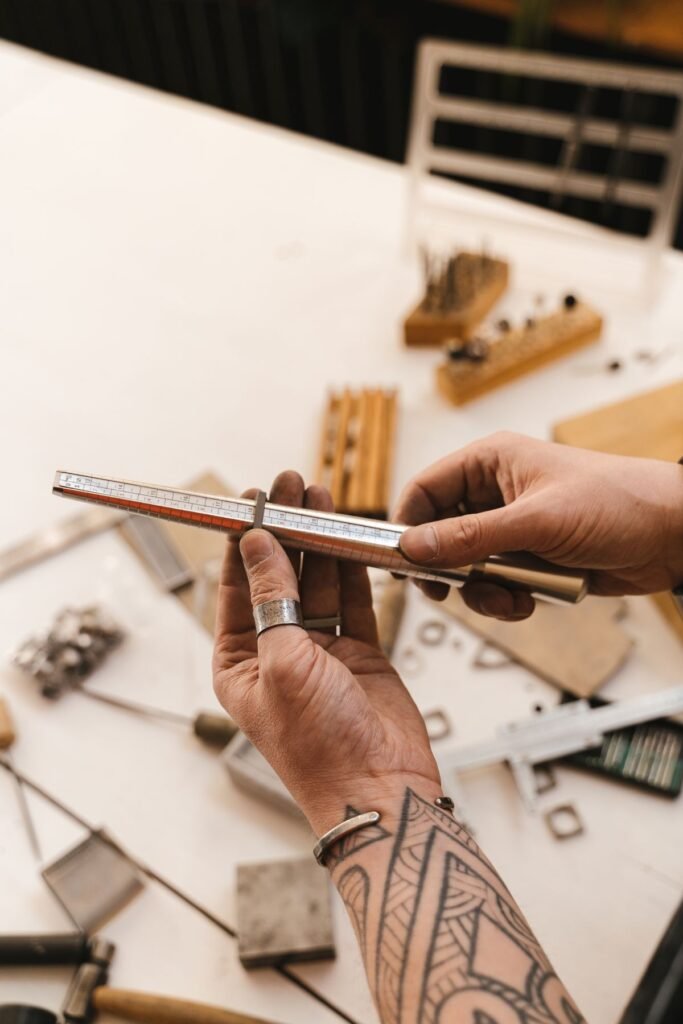
Method 4: Use a Ring Sizer
Here, a jeweler’s ring sizer set, a loop of polished metal rings in every size, sits on a dark velvet tray. Sizer sets and plastic adjustable ring sizers are inexpensive, and many jewelers send a free or low-cost sizer when you order.
How to do it: try sizes on until you find one that slides over the knuckle with a little resistance and sits comfortably at the base of the finger. Note the number and check it against your seller’s chart.
For example: if you are spending more on an engagement ring, a sizer gives a better result than string or paper.
Tip: a sizer band is usually narrow. If your ring will be wide, ask the jeweler whether to adjust the size.
Fit Check 1: The Knuckle Test
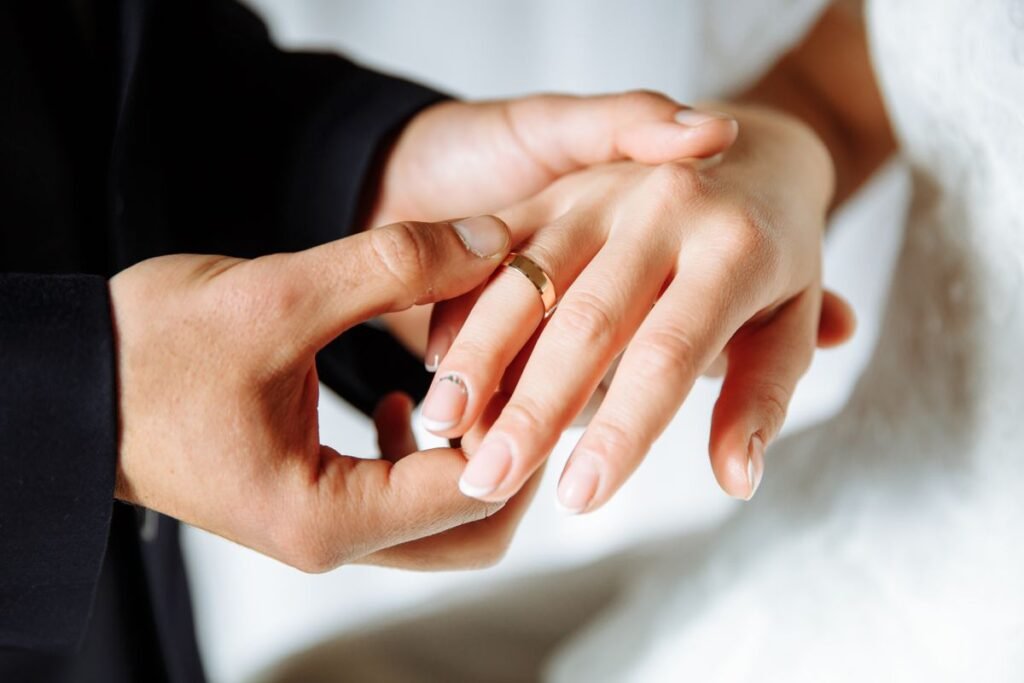
This photo shows a woman sliding a thin gold ring over her knuckle onto her ring finger. A ring has to fit two places: the base of the finger, where it sits, and the knuckle, which it has to pass over.
How to check it: the right size should slide over the knuckle with a small push and then sit comfortably without spinning. If you need to twist hard to get it on or off, it is too small. If it turns around on its own, it is too big.
For example: people with larger knuckles sometimes choose a size that fits the knuckle and ask a jeweler about sizing beads or bars to keep the ring from spinning.
Tip: if you are between two sizes, many people choose the larger one, since a slightly loose ring is easier to adjust than one that won’t go on.
Fit Check 2: How a Good Fit Looks
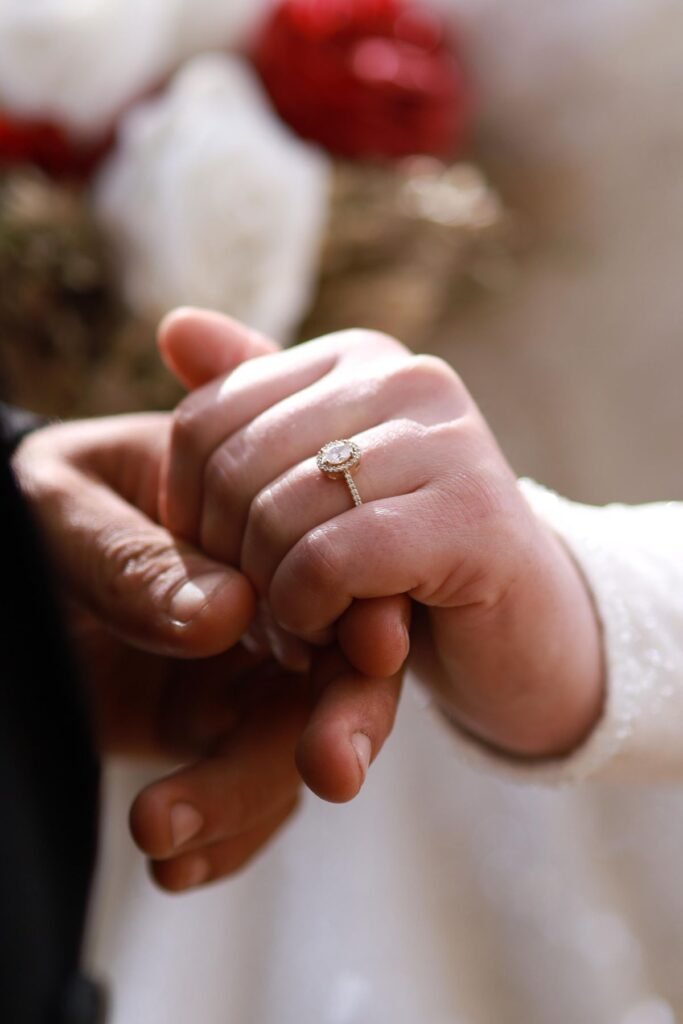
The last picture shows a hand wearing a solitaire engagement ring that fits well: it sits straight at the base of the finger, the stone stays on top, and the skin around the band is not squeezed. That is what you are aiming for.
What to look for: the ring stays in place when you shake your hand gently, it doesn’t leave a deep mark when you take it off, and the setting doesn’t tip to one side.
For example: a heavier stone can make a slightly loose ring tip sideways, so a snug fit matters more for solitaires.
Tip: before ordering, check the seller’s resizing policy. Some rings, such as eternity bands, are hard or impossible to resize.
Which method should you use?
- Quick estimate: string or paper strip.
- Surprise purchase: measure a ring they already wear.
- Expensive ring: a ring sizer, or a visit to a jeweler to confirm.
You might also like
- How to Clean an Engagement Ring at Home (Safely, in 6 Steps)
- 6 Emerald Cut Engagement Ring Styles (and How to Choose Yours)
FAQ
Can I find my ring size with a string?
Yes, for a good estimate. Wrap it around the base of the finger, mark the overlap, measure the length in millimeters and compare it with the seller’s size chart.
What time of day should I measure my ring size?
Measure when your hands are warm and at their normal size, often later in the day, and avoid measuring right after being in the cold.
Do wide bands need a different size?
Wide bands can feel tighter than thin ones in the same size. Ask the jeweler whether they recommend sizing up for a wide band.
What if I am between two ring sizes?
Many people choose the larger size so the ring passes over the knuckle easily, then ask a jeweler about small adjustments if it spins.
How can I find out someone’s ring size secretly?
Borrow a ring they wear on the same finger and measure its inside diameter, or ask a close friend or family member who might know.
Measure twice, check the knuckle, and use your jeweler’s own chart, and your ring will fit from the first day.

Leave a Reply