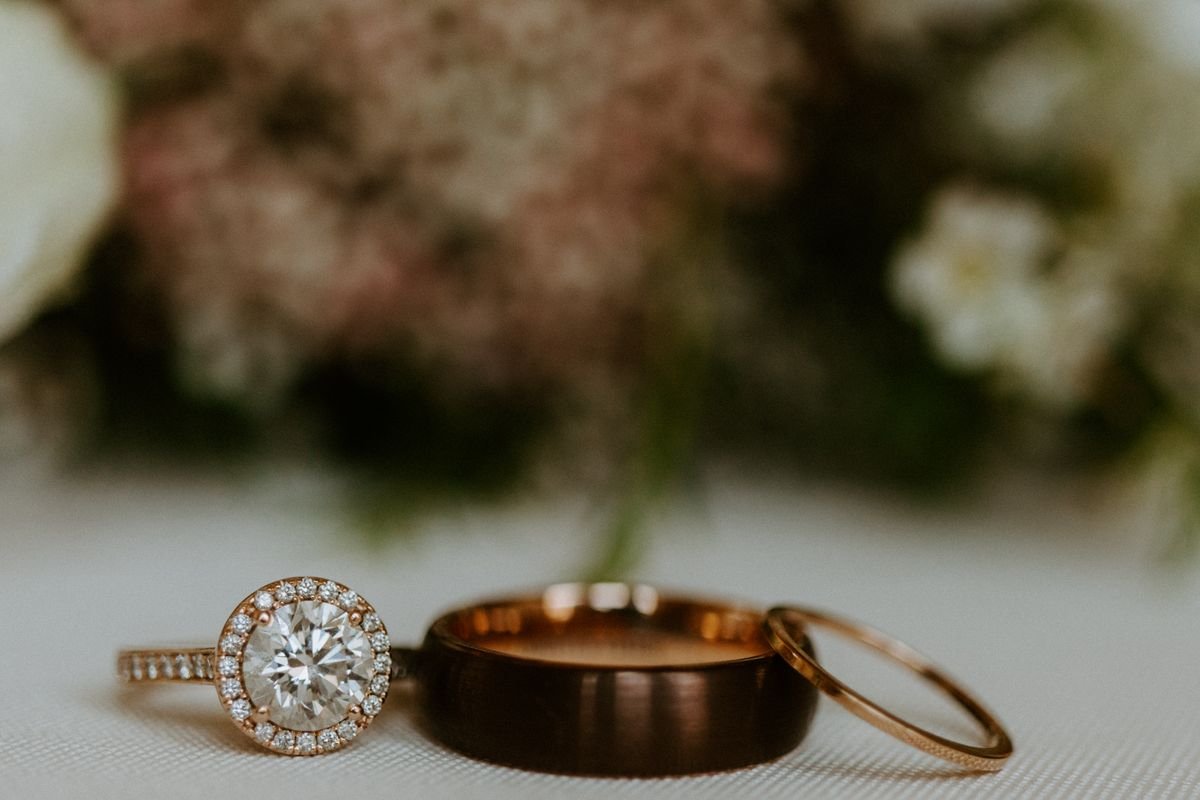
An engagement ring is worn almost every day, so it picks up hand cream, soap, sunscreen and everyday dust. Over a few weeks, that film builds up behind the stone and the ring looks dull, even though nothing is wrong with it. The good news is that you don’t need special equipment to bring the sparkle back.
The short answer: here is how to clean an engagement ring at home: soak it for a few minutes in a small bowl of warm water with a few drops of mild dish soap, brush it gently with a soft toothbrush (especially under the stone), rinse it in clean warm water and dry it with a lint-free cloth. Avoid abrasive household cleaners and steam cleaners. The six steps below show each part, with tips for doing it safely.
New to engagement rings? Our guide to emerald cut engagement ring styles explains settings and shapes, which also affects how dirt collects.
Why engagement rings get dull
A dirty ring isn’t damaged. The Gemological Institute of America (GIA) points out that dirt won’t break or chip a diamond, but it does dull how it looks (GIA, How to Protect Your Diamond Engagement Ring). Oils and residue collect on the back of the stone, where light enters, so cleaning the underside makes the biggest difference.
How to clean an engagement ring at home, step by step
Step 1: Soak the ring in warm, soapy water
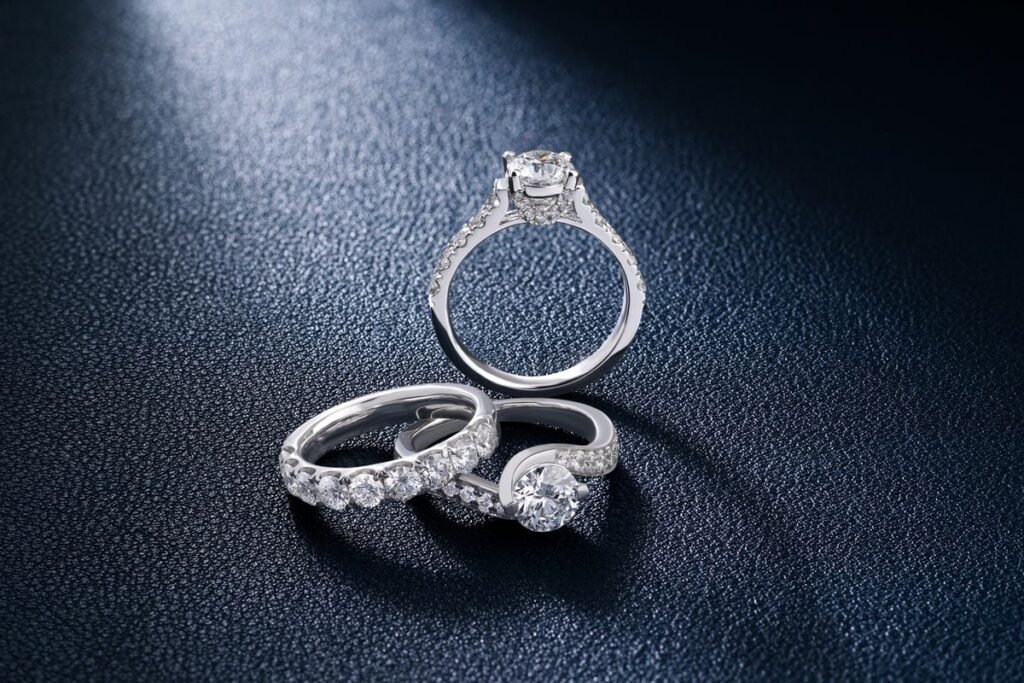
The picture shows a diamond engagement ring resting at the bottom of a small clear glass bowl of warm water with soap bubbles on top, on a white marble counter. Soaking loosens hand cream and everyday grime so you don’t have to scrub hard.
How to do it: fill a small bowl with warm (not hot) water and add a few drops of a mild dish soap. Put the ring in and leave it for a few minutes. Use a bowl rather than the sink, so the ring can’t slip down the drain.
For example: a cereal bowl or a small glass dish works perfectly; you only need enough water to cover the ring.
Tip: GIA lists warm water, mild soap and a soft toothbrush as a home cleaning method, and warns against abrasive household cleaners and steam cleaners. Keep it simple.
Step 2: Brush gently with a soft toothbrush
Here, a soft toothbrush, a diamond ring with a halo of small stones and a glass bowl of soapy water sit on a folded white towel. The towel is a small but smart detail: if the ring slips from your fingers, it lands softly instead of bouncing off a hard counter.
How to do it: take the ring out of the water and brush gently all over, paying most attention to the underside of the stone and around the prongs, where residue hides. Dip the brush back into the soapy water as you go.
For example: a children’s toothbrush or a new extra-soft brush is ideal. Keep one just for jewellery so it never has toothpaste on it.
Tip: brush lightly. Pressing hard doesn’t clean better and can catch on prongs or small pave stones.

Step 3: Rinse and dry with a lint-free cloth
This photo shows a yellow gold solitaire with a round diamond resting on a soft grey microfiber cloth, with a few water droplets around it. Drying properly matters, because water spots and fluff from paper towels can leave the stone looking cloudy again.
How to do it: rinse the ring under clean warm running water with the sink plug closed (or over a bowl). Then pat it dry with a lint-free cloth, such as a microfiber or glasses-cleaning cloth. Let it air-dry for a few minutes before putting it back on.
For example: if you don’t have a microfiber cloth, a clean cotton handkerchief works better than a tissue.
Tip: between deep cleans, GIA notes that a lint-free cloth alone can be used to wipe the ring.
Keeping your ring clean and safe between cleanings
Step 4: Take it off for messy or rough jobs
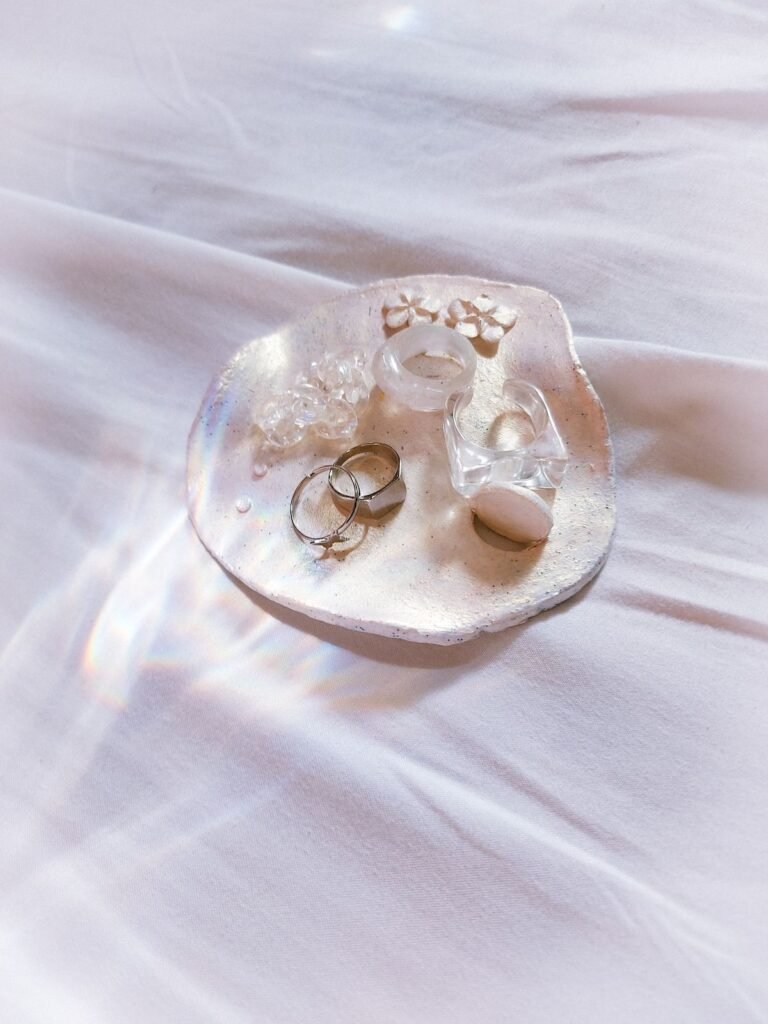
Here, a small white ring dish holds an engagement ring and a wedding band on a kitchen windowsill above the sink, next to a pot of basil. A dish near the sink gives your ring a safe place to wait while you cook or wash up, which keeps it cleaner for longer.
When to take it off: GIA recommends removing your ring for activities such as exercise and gardening, and before washing dishes, since a ring can go down the drain. It also mentions cold weather, when fingers shrink and rings can slide off more easily.
For example: make it a habit to slip the ring into the dish before you knead dough, apply hand cream or sunscreen, or wash up, then put it back on afterwards.
Tip: never leave a ring loose on the edge of the sink. Always use a dish or put it straight back on.
Step 5: Check the prongs and setting
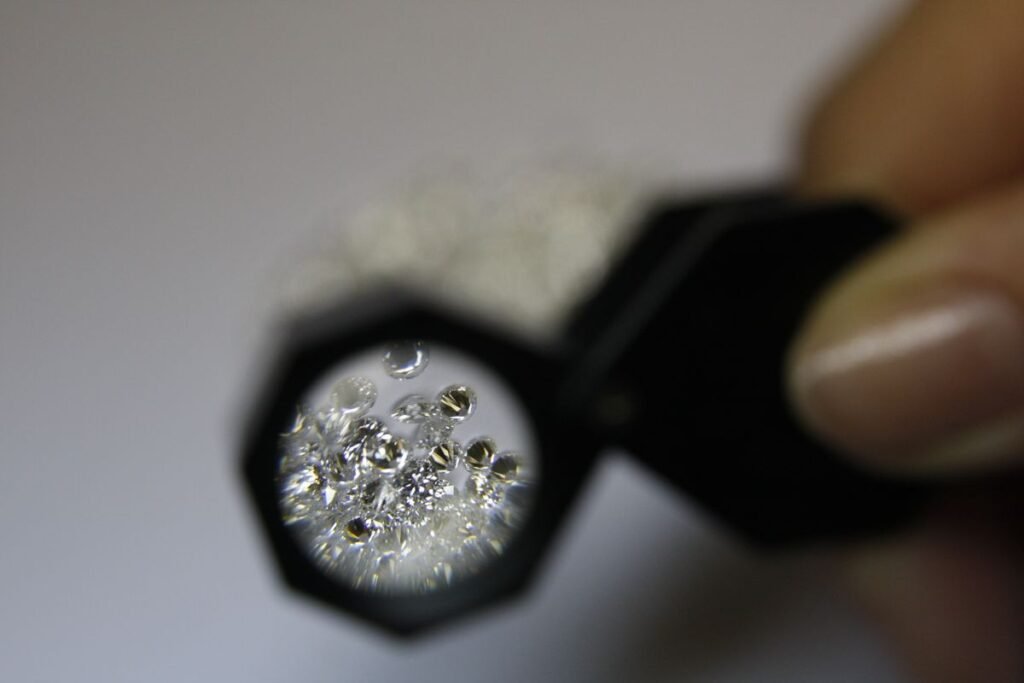
This picture shows a jeweler’s loupe lying next to a diamond solitaire on a black velvet tray on a workbench. Cleaning is the perfect moment to look at the setting, because a clean ring makes loose prongs and gaps much easier to see.
How to do it: GIA suggests gently pushing the stone to see if it moves, and looking for gaps between the diamond and the setting; a 10x loupe helps. It recommends having prongs checked every six months, or at least once a year, for example on your wedding anniversary.
For example: if you hear a faint click when you tap the stone, or it moves at all, stop wearing the ring and take it to a jeweler. Tightening prongs is routine bench work.
Tip: many insurance policies require regular check-ups, so ask your insurer what they need.

Step 6: Store it safely and get a professional clean now and then
The last photo shows a sparkling diamond halo ring standing in an open cream velvet ring box. A padded box like this protects the ring when you are not wearing it.
How to do it: GIA advises storing each diamond piece separately in a padded box or soft pouch, because diamond jewellery stored together can scratch and chip other pieces. It also recommends having the ring cleaned by a professional jeweler from time to time.
For example: when you take the ring for its prong check, ask for a professional clean at the same visit.
Tip: GIA notes that ultrasonic cleaners are safe for untreated diamonds but can damage treated ones. If you are not sure whether your stone has been treated, or your ring has other gemstones, ask a jeweler before using one.
What not to use
- Abrasive household cleaners or scouring powders
- Steam cleaners at home
- Hard brushes or anything sharp to pick out dirt
- An ultrasonic cleaner, unless you know your stone is untreated and a jeweler says it is safe for your setting
You might also like
FAQ
What is the safest way to clean an engagement ring at home?
Warm water, a few drops of mild dish soap and a soft toothbrush, followed by a rinse and drying with a lint-free cloth.
Can I use dish soap to clean my diamond ring?
Yes, a mild dish soap in warm water is a gentle option. Avoid abrasive cleaners.
How often should I clean my engagement ring?
Whenever it looks dull. Many people do a quick soak every week or two, and have the prongs checked by a jeweler every six to twelve months.
Are ultrasonic cleaners safe for engagement rings?
According to GIA, they are safe for untreated diamonds but can damage treated diamonds. Ask a jeweler if you are unsure.
Should I take my engagement ring off to wash dishes?
Yes. It keeps the ring cleaner and avoids the risk of it slipping down the drain.
Bookmark this guide and give your ring a quick soak this weekend; you’ll see the difference straight away.

Leave a Reply